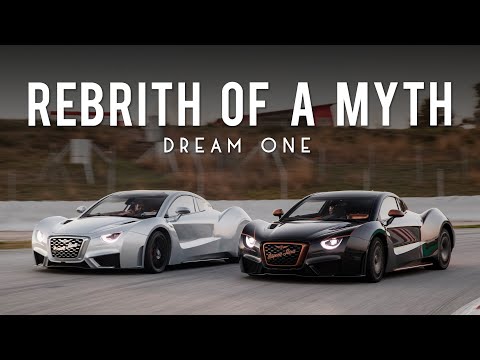
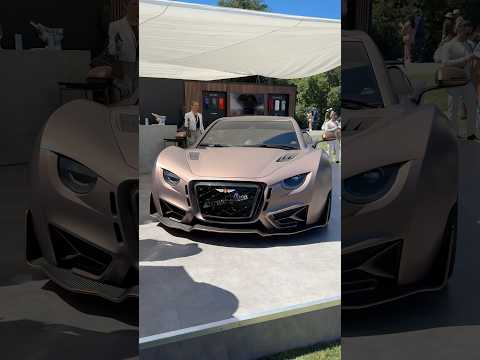
Hispano Suiza — Rare Footage & Clips
The Hispano Suiza marque is a testament to the rich automotive heritage of Spain, a country that has consistently punched above its weight in the world of high-performance motoring. Founded in 1904 by Marc Birkigt and Damián Mateu, Hispano-Suiza quickly established itself as a manufacturer of luxury cars, aircraft engines, trucks, and even weapons. The company's name is a reflection of its unique blend of Spanish and Swiss influences, with the "Hispano" prefix denoting its Iberian roots and the "Suiza" suffix paying homage to Birkigt's Swiss heritage.
As we delve into the archives, one clip that stands out is from 1923, where Hispano-Suiza's French luxury car arm becomes a semi-autonomous partnership with the Spanish parent company. This marked a significant milestone in the marque's history, as it allowed for greater flexibility and innovation in its product development. The partnership also enabled Hispano-Suiza to tap into the growing market for luxury cars in France, cementing its position as a major player in the European automotive scene.
However, the 1930s proved to be a tumultuous period for Hispano-Suiza, with the outbreak of the Spanish Civil War forcing the company's Spanish factories in Barcelona and Seville to be taken over by both sides for war production. This marked a turning point in the marque's history, as it was forced to adapt to the changing circumstances of the time. The war also had a profound impact on the automotive industry as a whole, with many manufacturers struggling to survive amidst the chaos.
In 1946, Hispano-Suiza's Spanish assets were taken over by the truck manufacturer ENASA, marking the beginning of a new era for the company. However, it was not until after World War II that Hispano-Suiza began to rebuild and reassert its position in the automotive market. The marque continued to produce luxury cars, aircraft engines, and components, but it was during this period that Hispano-Suiza also began to explore new markets and technologies.
One area where Hispano-Suiza made a significant contribution is in the development of aviation engines. As we see in an archive clip from 1948, Hispano-Suiza's engineers were at the forefront of innovation in engine design, developing powerful and efficient engines that powered many of the world's leading aircraft. This expertise was not limited to military applications, as Hispano-Suiza also developed engines for commercial aviation.
While Hispano-Suiza may not be a household name in the same way as some other luxury car manufacturers, its significance extends beyond the automotive world. In fact, Hispano-Suiza has played a notable role in music history, albeit indirectly. As it happens, the Spanish composer and pianist Enrique Granados was a great admirer of Hispano Suiza's luxury cars. Granados, who passed away in 1916, was known for his romantic and expressive compositions, which often featured complex harmonies and melodies.
In an interesting aside, we find that Granados' love affair with Hispano-Suiza's cars was not limited to their aesthetic appeal. Rather, it was the marque's commitment to innovation and quality that resonated with the composer. As one historian noted, "Granados saw in Hispano-Suiza a reflection of his own artistic values: a passion for beauty, a dedication to excellence, and a willingness to push boundaries."
This connection between Hispano Suiza and music may seem tenuous at first glance, but it speaks to the marque's enduring legacy. For over a century, Hispano Suiza has been synonymous with luxury, innovation, and style – qualities that have captivated artists, engineers, and enthusiasts alike.
As we continue to explore the archives, one clip stands out for its sheer drama: a 1930s film showing Hispano-Suiza's aircraft engines being tested at the company's factory in Barcelona. The footage is remarkable not only for its technical detail but also for its sense of urgency and purpose. As the engines roar to life, it becomes clear that Hispano-Suiza was on the cutting edge of innovation – a position it would maintain throughout the decades.
In 1968, Hispano-Suiza's parent company was taken over by Snecma, which is now part of the French Safran Group. This marked a significant shift in the marque's ownership structure, but one that ultimately allowed for greater stability and investment in research and development. Today, Hispano Suiza remains an important player in the automotive industry, with its legacy extending far beyond its own production lines.
As we reflect on Hispano-Suiza's remarkable history, it becomes clear that this Spanish marque has left an indelible mark on the world of high-performance motoring. From its early days as a luxury car manufacturer to its later focus on aviation engines and components, Hispano Suiza has consistently pushed boundaries and innovated in ways that have inspired generations of engineers, designers, and enthusiasts. As we continue to explore the archives, one thing is certain: Hispano-Suiza will forever be remembered as a true pioneer in the world of cars.
Curated from public records and music databases.






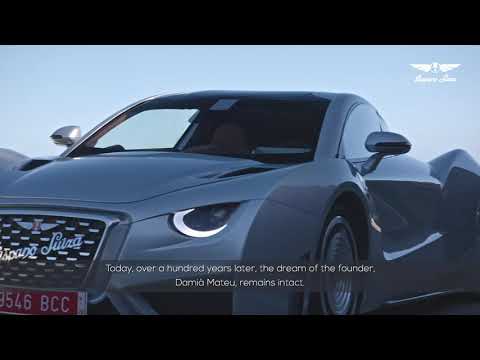
![Thumbnail for Real CAR DESIGN [Full Tailored & Customized Car] - Hispano Suiza by Hispano Suiza](https://img.youtube.com/vi/H-ekwCA6LoA/hqdefault.jpg)