0 views
Share this clip
Know someone who'd love this clip?
Share it with friends and fellow fans.
Share this clip
Know someone who'd love this clip?
Share it with friends and fellow fans.
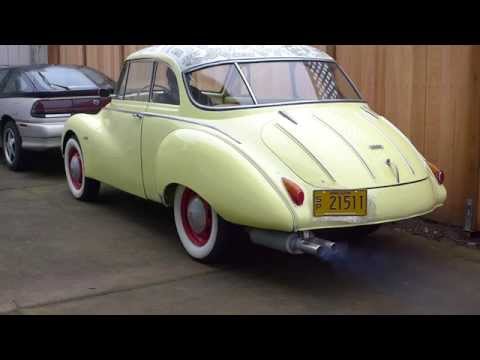
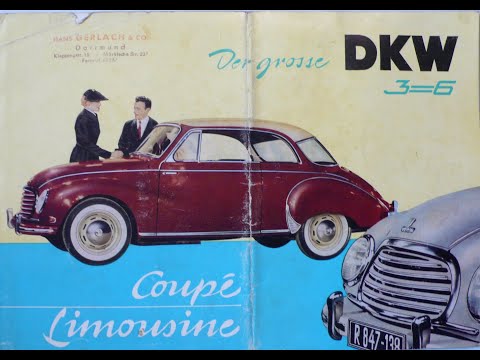
Wer baute das bessere Auto? IFA F9 vs. DKW F89 im direkten Vergleich 1950. Auto Union hat keine Fabrik, kein Kapital, und kein Auto. Was sie haben: alte Konstruktionszeichnungen, eine gepachtete Rüstungsfabrik in Düsseldorf, und einen Motor, der eigentlich nicht in diese Karosserie gehört. Das Ergebnis heißt DKW Meisterklasse F89 – und ohne ihn gäbe es heute möglicherweise kein Audi. Die Geschichte des ersten Nachkriegs-PKW von Auto Union: Wie er entstand, warum er ein Kompromiss war, und was er trotzdem bedeutete. 00:00 Intro – Düsseldorf, August 1950 00:45 Auto Union 1932 – Die vier Ringe 02:30 Der DKW F9 – Das Vorkriegs-Wunschauto 04:30 Krieg und Verlust 06:00 Flucht nach Westen – Bruhn und Hahn 08:00 Neugründung in Ingolstadt 09:30 Schnellaster und Motorrad 11:00 Der F89 entsteht – die Verlegenheitslösung 13:00 Technik des F89 14:30 Markteinführung und Preis 15:30 Varianten – Karmann, Hebmüller, Universal 16:30 Der Ifa F9 – dieselben Zeichnungen, anderer Staat 18:30 Konkurrenz und das Ende des F89 19:30 Der F91 und der Abgang der Meisterklasse 20:15 Bedeutung – und der Weg zu Audi 21:00 Outro Wenn du eine DKW-Geschichte aus der Familie hast – schreib sie in die Kommentare. #DKW #DKWMeisterklasse #AutoUnion #Zweitakter #Oldtimer #DDR #IFA #Automobilgeschichte #Wirtschaftswunder #Audi #DeutscheAutos #Klassiker #Youngtimer #Automobilhistorie #Nachkriegszeit #F89 #IFAF9 #Wartburg #Trabant #Adenauer https://www.youtube.com/playlist?list=PL2bNztJNIj6EAXCvWquo4PiKLsHffi0xD
DKW was a German car and motorcycle marque. DKW was one of the four companies that formed Auto Union in 1932 and thus became an ancestor of the modern-day Audi company. In 1916, Danish engineer Jørgen Skafte Rasmussen founded a factory in Zschopau, Saxony, Germany, to produce steam fittings. That year he attempted to produce a steam-power car; German: Dampfkraftwagen, from which the acronym DKW is derived. That steam car was unsuccessful, and in 1919 he made toy two-stroke engines under the nam...
More about DKW→Added
The 1950 comparison footage between the IFA F9 and the DKW F89 is a fascinating piece of automotive history that sheds light on the early days of post-war German car manufacturing. This clip, which clocks in at 21:14 minutes, offers an in-depth look at the development of the DKW Meisterklasse F89, a model that would go on to play a significant role in the formation of the modern-day Audi company.
The footage begins with an introduction to Auto Union, one of four companies that merged in 1932 to form the entity. By 1950, however, Auto Union had lost its factory, capital, and existing car models due to the devastation of World War II. Despite these setbacks, the company's engineers managed to cobble together a new model using old construction drawings, a rented factory in Düsseldorf, and an engine that was not originally designed for the F89's chassis.
The DKW Meisterklasse F89, as it came to be known, was a compromise born out of necessity. Its development is a testament to the ingenuity and resourcefulness of Auto Union's engineers, who were able to create a viable car model despite the significant challenges they faced. The F89's story is also closely tied to the broader history of post-war German industry, which was marked by a period of rapid economic growth known as the Wirtschaftswunder.
One of the most interesting aspects of this footage is the comparison between the IFA F9 and the DKW F89. Both cars were built using the same construction drawings, but they were produced in different countries: East Germany (GDR) for the IFA F9 and West Germany (FRG) for the DKW F89. This contrast highlights the significant differences in car design and production between the two German states during this period.
The clip also delves into the technical specifications of the F89, including its engine, transmission, and suspension systems. Additionally, it discusses the car's market introduction and pricing, as well as the various variants that were produced, such as the Karmann, Hebmüller, and Universal models.
As the footage progresses, it becomes clear that the DKW Meisterklasse F89 played a significant role in the development of the modern Audi company. The F91, which was introduced after the F89's production ended, marked the beginning of a new era for Auto Union, one that would eventually lead to the formation of Audi as we know it today.
This comparison footage is notable not only because of its historical significance but also because it offers a unique glimpse into the early days of post-war German car manufacturing. It serves as a reminder of the challenges and opportunities faced by companies like Auto Union during this period, and how they ultimately contributed to the development of the modern automotive industry.
The clip's relevance extends beyond its historical importance, however. For enthusiasts of classic cars and those interested in the history of automobile design, this footage provides a fascinating look at the creative solutions developed by engineers in response to the challenges of post-war Germany. As such, it is a must-watch for anyone interested in the rich and complex history of the automotive industry.
Curated from public records and music databases.
 5:20
5:201952 Ford
 1:48
1:481952 Ford
 0:27
0:27 1:43
1:431952 Ford