0 views
Share this clip
Know someone who'd love this clip?
Share it with friends and fellow fans.
Share this clip
Know someone who'd love this clip?
Share it with friends and fellow fans.
Marauder 100 registration HFY330, built in 1951, taken at the British Motor Museum. Marauder Car Company Limited was a British car venture by ex-Rover engineers George Mackie and Peter Wilks. After successfully racing their single-seater Marauder racing car the pair left Rover in 1950 and formed Wilks, Mackie and Company to exploit their idea of a two-seater sports car based on the new Rover 75 chassis. In 1951 they changed the company's name to Marauder Car Company. The design was largely the work of Peter Wilks and "Spen" King who, like Wilks, was a nephew of brothers Spencer and Maurice Wilks who ran Rover. Spencer King was later famous for his involvement in many Rover and Leyland Group designs. Though usually considered a sports car their new car was marketed as a Marauder Tourer. The car named the "A", later joined by the more powerful "100", was based on the Rover P4 75 with the chassis shortened by 9 inches (230 mm) from 111 inches (2,800 mm) to 102 inches (2,600 mm), the track remaining the same at 52 inches (1,300 mm). The suspension was stiffened retaining the coil sprung independent front suspension and elliptical sprung live rear axle. In view of the much lighter 2/3-seater (a single bench seat but the seats were separated on the "100") open coachwork the engine was moved back to improve handling and front / rear weight distribution. The Rover gearbox was retained with optional Laycock–de Normanville overdrive but not the Rover free wheel mechanism. The gearchange moved from column to floor. The 6-cylinder, inlet over exhaust valve, 2103 cc Rover engine was slightly modified with higher compression ratio to raise the output by 5 bhp (4 kW; 5 PS) to 80 bhp (60 kW; 81 PS) whilst the 100 version was bored out to 2392 cc and fitted with triple SU carburettors to give 105 bhp (78 kW; 106 PS). The "A" was capable of 90 mph (145 km/h) and the "100" 100 mph (161 km/h). Manufacturing started in Dorridge, Solihull, West Midlands and later continued in Kenilworth, Warwickshire between 1950 and 1952. In 1951 Wilks, Mackie and Company's name was changed to Marauder Car Company. The first few bodies were made by Richard Mead in his Dorridge works and used some Rover panels but later ones were made by Abbey Panels of Coventry. About 15 cars were made including 2 of the "100"s before rising costs and tax changes priced the cars out of the market. The UK government doubled the already high level of Purchase Tax on cars with a pre-tax price above £1000.[3] In 1950 the car cost £1236 rising to over £2000 in 1952.[2] Both George Mackie and Peter Wilks rejoined Rover. https://en.m.wikipedia.org/wiki/Marauder_Cars
SEAT S.A. (English: ; Spanish: [ˈseat]; from Spanish Sociedad Española de Automóviles de Turismo, lit. 'Spanish Passenger Car Company') is a Spanish car manufacturer that sells its vehicles under the SEAT and Cupra brands. Founded on 9 May 1950, it was created as a joint venture between Spain's government-owned Instituto Nacional de Industria, which held a majority stake, Spanish private banks, and Fiat. After being listed as an independent automaker for 36 years, the Spanish government sold SEA...
More about SEAT→Added
 5:20
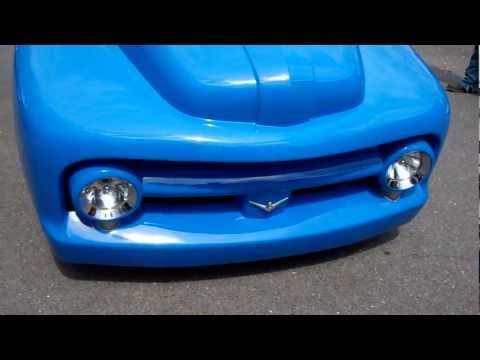
5:201952 Ford
 1:48
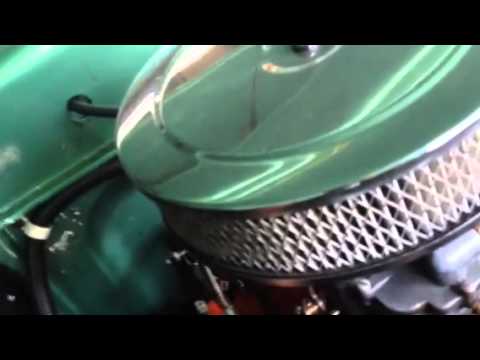
1:481952 Ford
 0:27
0:27 1:43
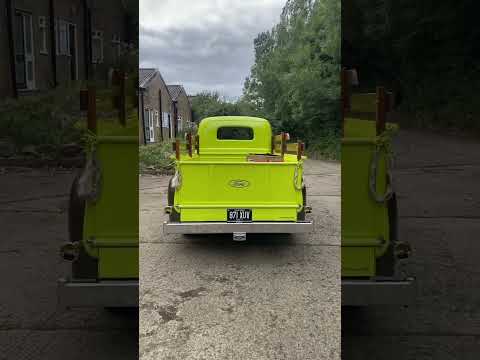
1:431952 Ford