0 views
Share this clip
Know someone who'd love this clip?
Share it with friends and fellow fans.
Share this clip
Know someone who'd love this clip?
Share it with friends and fellow fans.
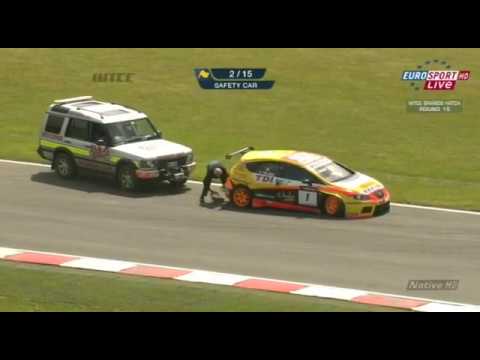
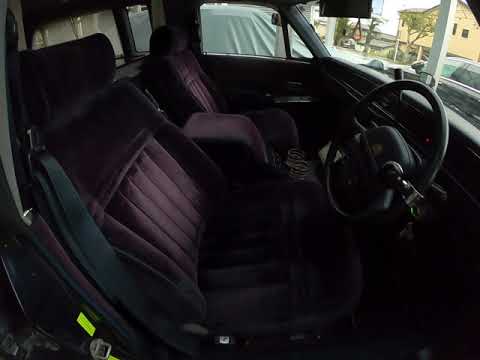
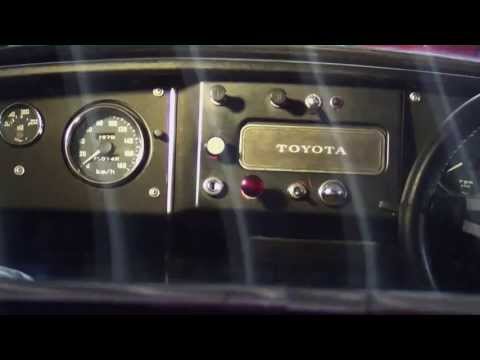
The Toyota Celica /ˈsɛlɨkə/ is a sport compact car produced by the Japanese company Toyota from 1970 to 2006. The Celica name was ultimately derived from the Latin word coelica meaning "heavenly" or "celestial". In Japan, the Celica was exclusive to Toyota Japanese dealerships Toyota Corolla Store. Throughout its life span the Celica has been powered by various four-cylinder engines. The most significant change occurred in August 1985, when the car's drive layout was changed from rear wheel drive to front wheel drive. During the first three generations, American market Celicas were powered by various versions of Toyota's R series engines. The four-wheel drive turbocharged model called GT-Four worldwide (All-Trac Turbo in the US) was produced from 1986 to 1999. Variable Valve Timing came in certain Japanese models starting in December 1997, and became standard in all models from 2000-on. Through seven generations, the model has gone through many revisions and design forks, including the Toyota Celica Supra (later known as the Toyota Supra). The Celica was available as notchback and liftback coupes, as well as a convertible. In late 1999, Toyota began production and sales of the seventh-generation Celica. It closely resembled the XYR concept with the exception of the front bumper and rear spoiler, while omitting the previously available coupe bodystyle. The 2000 model year Celica was an element of Toyota Project Genesis, an effort to bring younger buyers to the marque in the United States. Toyota took time to lighten the car and lower cost wherever possible. Power window and door lock controls were placed in the center console so only 1 set was necessary for both doors. Initial sunroofs were made of polymer plastic instead of the traditional glass. This generation was assembled by Kanto Auto Works at its Higashi-Fuji plant in Susono, Shizuoka Prefecture, Japan. Toyota Celica SS-I (ZZT230, Japan) The Celica came in two different models. The ZZT230 was powered by a relatively economical 1.8 L 4-cylinder 140 hp (104 kW) 1ZZ-FE engine and the ZZT231 powered by a higher-performance 1.8 L 4-cylinder 192 hp (143 kW) (in Europe and Japan) 2ZZ-GE version, co-developed with Yamaha, the latter featuring a two-step variable valve lift control in conjunction with its variable valve timing. In 2004, CNNMoney.com rated the Celica as one of the best cars to purchase for fuel economy.[16] Exporting of the Celica ceased in July 2005. However until mid-May, customers could still order one, although it was advised they took action before that time ended. The last Celica was rolled off production line on April 21, 2006. In its last year, the Celica was only officially sold in Japan. For availability and licensing inquiries, please contact: https://www.globalimageworks.com/contact Ref: S306
Kanto Auto Works was a Japanese car manufacturer. It was a member of the Toyota Group. In July 2012, Kanto Auto Works and two other Toyota subsidiaries were merged to form Toyota Motor East Japan.
More about Kanto Auto Works→Added
 3:49
3:49Kanto Auto Works
 6:16
6:16Kanto Auto Works
 2:09
2:09Kanto Auto Works
 2:15
2:15Kanto Auto Works
 19:46
19:46video in, BMW, video, Car, vide, video i, BMW 3 Series
 19:08
19:08BMW, Car, BMW 3 Series
 12:35
12:35BMW, WiLL, Car, Mexico, BMW 3 Series
 36:35
36:35BMW 3 Series (G20)