0 views
Share this clip
2019 Mercedes Benz GLC F-Cell – Full Review!!
Know someone who'd love this clip?
Share it with friends and fellow fans.
Share this clip
Know someone who'd love this clip?
Share it with friends and fellow fans.
The Mercedes-Benz GLC F‑CELL is a unique plug-in hybrid as it combines innovative fuel-cell and battery technologies for the first time: apart from electricity, it also runs on pure hydrogen. Intelligent interplay between battery and fuel cell, long range, and short refuelling times make the GLC F‑CELL a vehicle of high everyday practicality and also suitable for short and long-distance motoring. With 4.4 kg of hydrogen on board, the SUV generates enough energy for a range of up to 478 km in hybrid mode. The large lithium-ion battery delivers up to 51 km of range in the NEDC. An output of 155 kW guarantees both dynamic performance and locally emission-free driving pleasure. Initial vehicles are to be handed over to selected customers at the end of October. The GLC F-CELL represents an important step by Mercedes-Benz in the development of fuel cell technology. It features a totally new fuel cell system which is so compact that the entire system can be housed in the engine compartment for the first time and installed at the same mounting points as a conventional engine. In addition, the use of platinum in the fuel cell has been reduced by 90 percent in comparison to the predecessor vehicle. Consequently resources are conserved, and system costs are cut without impairing performance. Two carbon-fibre-encased tanks built into the vehicle floor hold 4.4 kg of hydrogen. Thanks to globally standardised 700-bar tank technology, the supply of hydrogen can be replenished within just three minutes – as quickly as is customary when refuelling a combustion-engined car. The lithium-ion battery has a gross capacity of 13.5 kWh and additionally serves as an energy source for the electric motor. Plug-in technology makes it easy to charge via the 7.4 kW on-board charger at a standard household socket, a wallbox or a public charging station – from 10 to 100 percent SoC (State of Charge) in approx. 1.5 hours if the full power is used. Just like the drive motor, an asynchronous motor with an output of 155 kW (211 hp) and a torque of 365 Nm, the powerful storage battery is space-savingly installed in the rear of the SUV. The innovative plug-in fuel-cell drive combines the advantages of both zero-emission drive technologies and, thanks to its intelligent operating strategy, continuously optimises the use of both energy sources in line with the current operating situation. This is also influenced by the selected drive program: ECO, COMFORT or SPORT. The battery and all components containing hydrogen are governed by particularly stringent safety standards typical of Mercedes. Alongside safety in the event of a crash, all Mercedes-Benz vehicles undergo additional component tests at system level that go far beyond the usual tests. The powertrain components and hydrogen tanks of the F-CELL pre-series vehicles are space-savingly and safely housed in the engine compartment as well as in the vehicle underbody. Mercedes-Benz’s safety assistance systems are also all on board the GLC F‑CELL. Their sensors have an additional purpose in vehicles that run purely on electric power in that their signals assist the powertrain control with the selection of a range-preserving, efficient strategy for using the on-board energy sources. The energy employed for accelerating the car is used intelligently, taking account of the route characteristics, topography and traffic situation. The driver can always set other priorities, of course, but subtle hints inform them of what they can do intuitively to optimise the vehicle range. Despite the extraordinary powertrain concept, the GLC F-CELL boasts the everyday practicality and comfort people have come to expect from a Mercedes‑Benz. Even the luggage compartment remains unchanged, with the exception of a minimal step, and the rear seats are only slightly higher positioned in order to make space for the hydrogen tanks. The climate comfort in the GLC F-CELL is on a par with conventional vehicles, and the pre-entry climate control based on mains charging current is an intelligent way of safeguarding the vehicle’s range. At cooler temperatures, the vehicle will make energy-efficient use of the waste heat from the fuel cell in order to optimise the energy balance of the vehicle. The GLC F-CELL is equipped with coil springs on the front axle and with single-chamber air suspension with integral automatic level control on the rear axle. This means that, even when the vehicle is carrying a load, there is no change in spring travel at the rear axle, which guarantees balanced vibration characteristics with a virtually constant natural frequency of the body, even when the vehicle is loaded. ➡️ Discover all new cars before anyone else! Subscribe now to AUTO TV 👉https://goo.gl/y9bfwm ⚠️ Don’t miss next videos: press the little bell ((🔔)) to get notifications
A plug-in hybrid electric vehicle (PHEV) or simply plug-in hybrid is a type of hybrid electric vehicle equipped with a rechargeable battery pack that can be directly replenished via a charging cable plugged into an external electric power source, in addition to charging internally by its on-board internal combustion engine–powered generator. While PHEVs are predominantly passenger cars, there are also plug-in hybrid variants of sports cars, commercial vehicles, vans, utility trucks, buses, train...
More about Plug-in hybrid→Added
 1:56
1:56BMW 6 Series (G32)
 8:37
8:37BMW 6 Series (G32)
 1:48
1:48BMW 6 Series (G32)
 0:46
0:46BMW 6 Series (G32)
 24:06
24:06Mid-size, Peugeot, Plug-in hybrid, SEAT, SUV, PHEV, video, Front-wheel drive, Car, vide, video i
 15:42
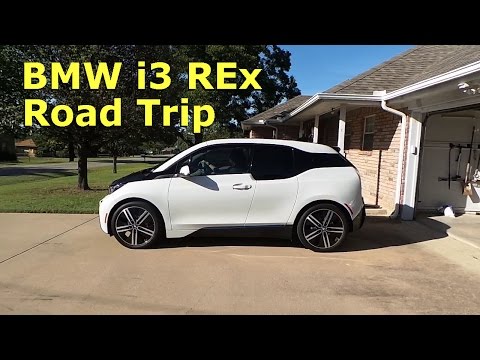
15:42Plug-in hybrid, BMW, WiLL, BMW i3, Car, Vehicle
 3:49
3:49Zeekr, Mercedes-AMG, Iveco, Plug-in hybrid, SUV, Luxury car, video, Car, vide
 16:40
16:40Plug-in hybrid, BMW, WiLL, BMW 7 Series, Car