Soichiro Honda: The Visionary Behind Honda's Global Success
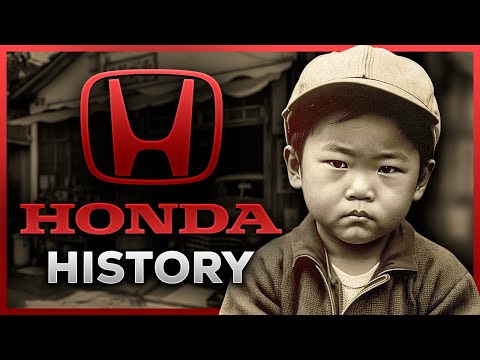
Soichiro Honda was born on November 17, 1906, in Hamamatsu, Shizuoka Prefecture, Japan. His father was a blacksmith who ran a small bicycle repair shop, and his mother was a weaver. From an early age, Honda showed a remarkable fascination for machines and technology. One defining moment in his childhood was seeing the first car that ever drove through his village, which left a lasting impression and shaped his future path. At the age of 15, he left school and moved to Tokyo to begin an apprenticeship at an auto repair shop called Art Shokai. There, he not only learned the technical skills of automotive work but also gained valuable experience in business and practical problem-solving. After several years, he returned to his hometown and opened a branch of Art Shokai, building race cars and even participating in races himself. However, a serious crash in 1936 ended his racing career. In the 1930s, he founded a company called Tokai Seiki, which manufactured piston rings for Toyota. Initially, the quality of his products was poor, which motivated him to study mechanical engineering to improve his skills. After World War II, his company was destroyed, and he sold what remained to Toyota. In 1948, with the proceeds, he founded Honda Motor Co., Ltd. together with Takeo Fujisawa. He started by producing simple motorized bicycles, but the major breakthrough came in 1958 with the Super Cub, an affordable, reliable, and easy-to-use motorcycle. It became a worldwide success and helped Honda become the largest motorcycle manufacturer in the world. In the 1960s, Honda entered the automobile industry, despite skepticism from experts. With models like the Honda N360 and later the Civic, the company once again demonstrated its capacity for innovation and market impact. Honda’s leadership style was unorthodox—relaxed, creative, and focused on innovation. He encouraged his employees to make mistakes, learn from them, and explore new ideas. He strongly believed that practical experience was more valuable than theoretical knowledge. One of his most famous sayings was, “Success is 99% failure.” Even in the 1970s, Honda was ahead of his time, working on environmentally friendly engines and contributing to the development of low-emission vehicles. He retired from daily operations in 1973 but remained an influential figure in the company until his death. He received numerous honors, including Japan’s highest civilian award. On August 5, 1991, Soichiro Honda passed away at the age of 84. His legacy lives on: Honda is now a global brand, known for quality, innovation, and engineering excellence. Soichiro Honda was not only an inventor and entrepreneur but a visionary who changed the world of mobility through passion, courage, and persistence.
Know someone who'd love this clip?
Share it with friends and fellow fans.