0 views
Share this clip
The McLaren Elva heritage meets its ancestor, the M1A, on the Laguna Seca race track
Know someone who'd love this clip?
Share it with friends and fellow fans.
Share this clip
Know someone who'd love this clip?
Share it with friends and fellow fans.
Racers Bruce McLaren and Denny Hulme both originally made their mark on the circuits of the 1960’s at the wheel of the potent McLaren M1A, a car that paved the way for McLaren’s global success in both Can-Am racing and road cars. Powered by thundering Oldsmobile V8’s, the McLaren M1A Mk1 became synonymous with McLaren’s success in North American racing, piloted by such luminaries as Chris Amon and Graham Hill. To celebrate the links between McLaren Automotive’s latest Ultimate Series car, the 804bhp McLaren Elva and its illustrious forebears, McLaren Beverly Hills has created an evocative video of the new Elva. Alongside one of the historic Can-Am McLarens, the video features reminiscences from key McLaren personalities including; McLaren Racing CEO, Zak Brown, McLaren Indy 500 winner, Jonny Rutherford and former McLaren F1 driver, JP Montoya. About the new McLaren Elva: Limited to just 149 versions globally, the latest McLaren Elva is a ferociously fast, open-cockpit, extreme two-seater with a bespoke carbon fibre chassis and body but no roof, no windscreen and no side windows. With every sensory input heightened, this is a car that exists to provide unparalleled driving pleasure on road or track. A 4.0-liter, twin-turbocharged McLaren V8 from the same family of engines that powers the McLaren Senna and Senna GTR combines with the lightest vehicle weight of any road car produced by McLaren Automotive to give the superlight new Ultimate Series roadster truly breath-taking performance across the board, with extraordinary levels of acceleration, agility and driver feedback. About the McLaren M1A: Designed by Bruce McLaren, the McLaren M1A was superlight, weighing just 1,215lbs with a lightweight but very rigid and strong chassis. A 340bhp Oldsmobile 4.5-liter V8 was mid-mounted. Suspension was cutting-edge for the mid-1960s: fully independent, with unequal length wishbones, anti-roll bar and adjustable coil springs and shock absorbers at the front and reversed lower wishbones with similar coil springs at the rear. The molded resin bodywork – again light in weight – was visually very distinctive, with the M1A and McLaren-Elva M1A [Mk I] both having a pointed nose and absence of any lip at the rear. The styling of the later McLaren-Elva M1B [Mk II] and M1C [Mk III] was more muscular, but from the outset the cooling ducts and side fuel tanks integrated into the design were laying down the principles of ‘form follows function’ and ‘everything for a reason’ to which McLaren still rigorously adheres. When the M1A raced in September 1964 at the Canadian Sports Car Grand Prix – the forerunner to the famous Canadian-American (Can-Am) Challenge Cup that McLaren drivers won for five consecutive years from 1967 to 1971 – it took third place overall but was the fastest car on the circuit, equalling the lap-record four times and breaking it seven more. Demand for customer cars after such an impressive showing was immediate, but with just seven employees at McLaren – all of whom were engaged in building team racing cars – the only solution was to outsource production. Frank Nichols of Elva Cars Ltd, a small, specialist sportscar manufacturer based in Sussex, UK, proposed that he would build replica versions of the M1A and in November 1964, McLaren and Elva’s parent company agreed terms to proceed. The McLaren-Elva M1A [Mk I] developed into the McLaren-Elva M1B [Mk II] and then the McLaren-Elva M1C [Mark III], the cars competing in privateer hands while in parallel the status of the McLaren brand grew as it moved towards becoming a major force in top-level motorsport. The McLaren-Elva M1B [Mk II] attracted the attention of American automotive magazine Road & Track, which in July 1966, declared it, “the fastest car we’ve ever tested (and) an example of the latest thinking in sports/racing cars.” The final iteration of the series, the McLaren-Elva M1C [Mk III], was introduced in 1967, by which time the McLaren works team had moved into a new era with the M6A. ⚡️⚡️ Discover all the new cars before anyone else! ⚡️⚡️ 🏎️SUBSCRIBE NOW to CAR VIDS ►► https://bit.ly/2NMTy2i 🏎️ 🔔 Don’t miss any new video: press the little bell ((🔔)) to get notifications
A car, or an automobile, is a motor vehicle with wheels. Most definitions of cars state that they run primarily on roads, seat 1-8 people, have four wheels, and mainly transport people rather than cargo. There are over 1.6 billion cars in use worldwide as of 2025. The French inventor Nicolas-Joseph Cugnot built the first steam-powered road vehicle in 1769, while the Swiss inventor François Isaac de Rivaz designed and constructed the first internal combustion-powered automobile in 1808. The mode...
More about Car→Added
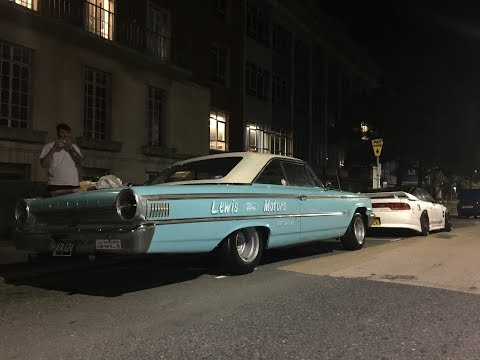 16:06
16:06Ford Galaxie
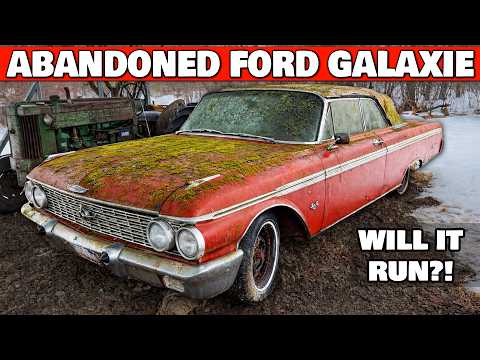 30:07
30:07Ford Galaxie
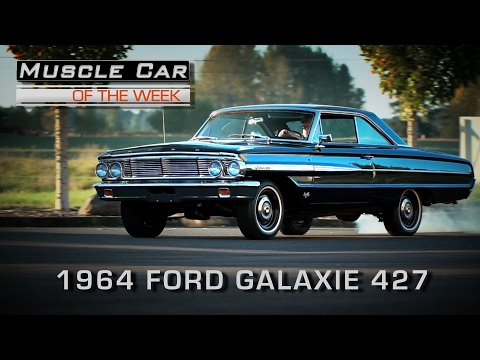 5:07
5:07Ford Galaxie
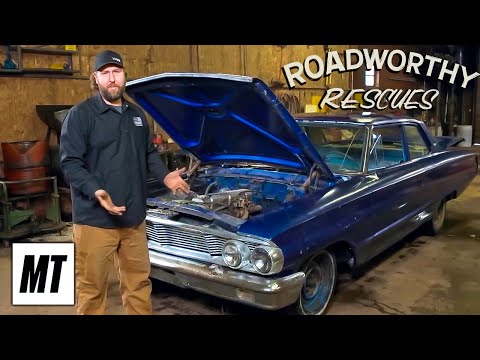 19:43
19:43Ford Galaxie
The McLaren Elva heritage meets its ancestor, the M1A, on the Laguna Seca race track in this captivating 3:04 clip from McLaren Beverly Hills. This footage is a masterclass in automotive storytelling, weaving together the threads of history, innovation, and performance to create an engaging narrative that will leave even the most seasoned car enthusiasts enthralled.
At its core, this video is about the lineage of McLaren Automotive's latest Ultimate Series car, the 804bhp Elva. The film takes us back in time to the 1960s, where we find Bruce McLaren and Denny Hulme making their mark on the circuits at the wheel of the potent M1A. This was a pivotal moment in McLaren's history, as the M1A paved the way for the company's global success in both Can-Am racing and road cars.
The M1A, with its thundering Oldsmobile V8s, became synonymous with McLaren's success in North American racing, piloted by luminaries such as Chris Amon and Graham Hill. This heritage is not just about nostalgia; it's a testament to the innovative spirit that has driven McLaren Automotive to push the boundaries of performance and design.
Fast forward to the present day, and we find ourselves in the midst of an era where innovation knows no bounds. The new Elva is a ferociously fast, open-cockpit extreme two-seater with a bespoke carbon fibre chassis and body. With its 4.0-liter, twin-turbocharged McLaren V8 engine, this car is a marvel of modern engineering, combining extraordinary levels of acceleration, agility, and driver feedback.
What makes this footage truly remarkable is the way it brings together key McLaren personalities, including CEO Zak Brown, Indy 500 winner Jonny Rutherford, and former F1 driver JP Montoya. Their reminiscences add an extra layer of depth to the narrative, providing a unique insight into the company's history and its continued commitment to innovation.
The clip is not just about the cars; it's also about the people who have driven them to success. The McLaren Elva may be a cutting-edge supercar, but its heritage is rooted in the pioneering spirit of Bruce McLaren and his team. This video is a celebration of that legacy, a reminder that even as technology advances, the core values of innovation, performance, and design remain at the heart of what makes McLaren Automotive tick.
As we watch the Elva and M1A take to the Laguna Seca track, it's impossible not to be drawn into the world of high-performance driving. The clip is a masterclass in storytelling, using a combination of archival footage, interviews, and on-track action to create an engaging narrative that will leave even the most seasoned car enthusiasts enthralled.
In short, this footage is a must-watch for anyone who loves cars, racing, or simply the thrill of performance driving. It's a celebration of McLaren Automotive's rich heritage, its commitment to innovation, and its continued pursuit of excellence in the world of high-performance motoring.
Curated from public records and music databases.