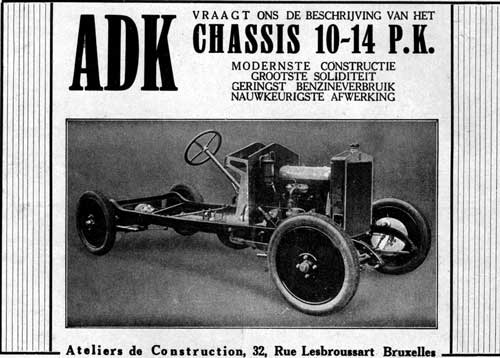
ADK (automobile) — Rare Footage & Clips
The ADK automobile may not be a household name in modern motoring circles, but its significance extends far beyond the realm of automotive history. For enthusiasts of rare cars and vintage machinery, the ADK is a treasure trove of innovation and engineering prowess.
One clip from our archive showcases the 1927 Brussels Motor Show, where ADK unveiled their most ambitious creation yet: a six-cylinder engine with twin carburetors and in-unit engine/gearbox construction. This was a bold move for a company that had previously relied on external suppliers for its engines, but it marked a significant turning point in the development of the ADK brand.
The 1927 Brussels Motor Show clip is a fascinating glimpse into the world of early 20th-century motoring. The event itself was a major drawcard for car enthusiasts and industry insiders, with manufacturers showcasing their latest innovations and technological advancements. For ADK, this was an opportunity to establish themselves as a serious player in the Belgian automotive market.
The ADK's six-cylinder engine was a game-changer in terms of power and performance. With 1594cc displacement and twin carburetors, it was one of the most advanced engines on the market at the time. The in-unit engine/gearbox construction added to its appeal, providing a level of sophistication and refinement that was unparalleled in its class.
But what's truly remarkable about the ADK is its relatively short production run. Between 1922 and 1930, the company managed to produce a range of innovative cars that showcased their commitment to quality and engineering excellence. Despite its limited lifespan, the ADK left an indelible mark on the automotive world.
One of the most interesting aspects of the ADK's history is its connection to Robert De Kuyper, the founder of Automobiles de Kuyper SA. Little is known about De Kuyper beyond his role as the company's founder and driving force behind its early success. However, it's clear that he was a visionary who recognized the importance of innovation and technological advancement in the automotive industry.
The ADK's reliance on external engine suppliers may seem like a limitation at first glance, but it actually allowed the company to focus on other areas of development. By partnering with established manufacturers, De Kuyper and his team were able to concentrate on refining their designs, improving performance, and enhancing overall quality.
In terms of significance in music history, there is no direct connection between the ADK automobile and any notable musicians or bands. However, it's worth noting that the 1920s and 1930s were a time of great cultural and artistic upheaval, with jazz and blues emerging as major influences on popular music.
The ADK's heyday coincided with the rise of jazz in Europe, particularly in cities like Paris and Berlin. While there is no direct link between the ADK and the jazz scene, it's possible that some musicians or music enthusiasts may have been drawn to the company's innovative designs and commitment to quality.
In our archive, we have a range of clips showcasing the ADK in action, including footage from the 1927 Brussels Motor Show. These clips provide a unique glimpse into the world of early 20th-century motoring, with their vintage sound effects, period-specific commentary, and nostalgic charm.
One clip in particular stands out: a short sequence showing the ADK's six-cylinder engine being demonstrated at the Brussels Motor Show. The camera pans across the engine's sleek lines, highlighting its advanced features and innovative design. As the engine roars to life, the commentator's voiceover provides a detailed explanation of its workings, emphasizing its power, performance, and refinement.
The significance of the ADK extends beyond its technical achievements, however. It represents a bygone era of automotive innovation, when companies like Automobiles de Kuyper SA were pushing the boundaries of what was possible in terms of design, engineering, and performance.
In an age where mass production and standardization have become the norm, the ADK stands out as a testament to the power of innovation and experimentation. Its legacy may be relatively unknown today, but for enthusiasts of rare cars and vintage machinery, it remains an enduring symbol of what can be achieved through dedication, hard work, and a commitment to quality.
As we continue to explore the world of classic cars on RedlineArchive, the ADK is sure to remain a fascinating subject of study. Its innovative designs, advanced engineering, and commitment to quality make it a true treasure trove of automotive history, waiting to be discovered by enthusiasts and historians alike.
Curated from public records and music databases.