0 views
Share this clip
The Honda That Launched Gen-X Families: 2000 CRV SE
Know someone who'd love this clip?
Share it with friends and fellow fans.
Share this clip
Know someone who'd love this clip?
Share it with friends and fellow fans.
The 2000 Honda CR-V SE was the 8th of the 20 Hondas I’ve owned in my life, and it marked one of the most important turning points — both for me personally and for Honda as a company. I purchased this CR-V in May of 2000, just before the birth of our first child. Up to that point, our garage reflected pure Gen-X Honda enthusiast life. My wife had been driving our 1998 Civic EX coupe for several years, and I was still driving my 2000 Honda S2000, soon upgrading to a 2001 S2000, while my 1988 Civic hatch served as my daily driver. We had three Hondas — but none designed for a family. That’s where the CR-V came in. The CR-V SE was Honda’s most refined Civic-based platform yet. Being the Special Edition, it featured leather seats — a first for this class of Honda in the U.S. — along with body-colored bumpers, upgraded trim, and the iconic hard shell spare tire cover mounted to the rear. Under the hood was the 2.0-liter DOHC B20 engine producing 146 horsepower. This engine was a direct derivative of the legendary B-Series architecture that defined Honda performance throughout the 1990s. However, unlike the high-revving VTEC engines found in Civics and Integras, the B20 in the CR-V was tuned for torque and smoothness, designed to move a heavier AWD vehicle rather than deliver track performance. And heavier it was. The CR-V weighed over 700 pounds more than the Civic it was based on. Performance suffered accordingly, with a 0–60 time of about 10.1 seconds and a quarter mile around 17.7 seconds. By enthusiast standards, this was slow — but that wasn’t the mission. Honda understood something critical. The same buyers who grew up loving Civics, CRXs, and Integras were now entering their late 20s and early 30s. They were starting families. Their needs were changing. And Honda changed with them. The CR-V was Honda’s first true in-house SUV and, at the time, the largest vehicle they produced. It wasn’t a rebadged Isuzu like the Passport. This was fully engineered by Honda and built on Honda principles — efficiency, reliability, and intelligent design. This period also marked the end of one of Honda’s greatest engineering eras. The B-Series engine platform, which defined Honda performance from 1989 through 2001, was nearing its end. These engines were mechanical, high-revving, and raw. They used timing belts, aggressive cam profiles, and delivered power at high RPM. Soon after, Honda would introduce the K-Series engine — featuring timing chains, i-VTEC cam phasing, improved torque curves, and modern electronic integration. This represented a philosophical shift from raw mechanical performance toward broader usability, efficiency, and refinement. The CR-V also reflected a broader change in Honda’s interior philosophy. The minimalist, lightweight interiors of the 1990s gave way to more refined cabins. Leather seating, thicker insulation, softer materials, and quieter ride characteristics became the new focus. Honda was evolving from a pure enthusiast brand into a mature global manufacturer. From my personal perspective, this CR-V marked the transition from youth to adulthood. It represented responsibility. It represented family. It represented the moment when performance was no longer the only priority. Unfortunately, we only owned this CR-V for about two years, as our family continued to grow and we soon needed something even larger. This also marked the beginning of my first real criticisms of Honda — particularly road noise, which was excessive in these early CR-Vs. But despite its flaws, the CR-V fulfilled its mission perfectly. It carried us into the next phase of life. The Honda that launched Gen-X families. This is Episode 08 A of my Gen-X Honda Origin Story — documenting all 20 Hondas I’ve owned over 35 years and how Honda evolved alongside an entire generation. If you lived through this era, you know exactly what this transition felt like. And this was just the beginning.
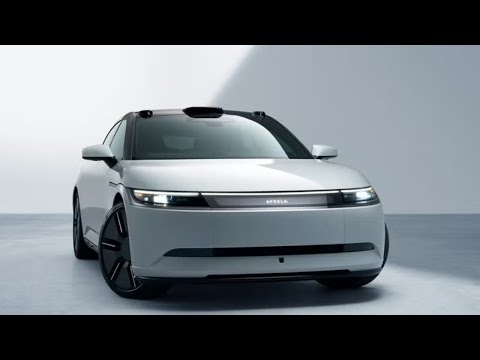
The Honda e is a battery electric car that was manufactured by Japanese automaker Honda and sold in Japan from 2020 to 2024 and in Europe from 2020 to 2023. It is a supermini with a five-door hatchback design and a battery-electric powertrain that drives the rear wheels. The vehicle is styled with a retro look reminiscent of the first-generation Civic. It was previewed by the 2017 Urban EV Concept with the production version first shown publicly in 2019.
More about Honda e→Added
 2:11
2:11Honda e, Toyota, rall, Mazda, VTEC, video, rally, WiLL, Car, Vehicle, Nissan, vide
 8:16
8:16Honda e, SEAT, Luxury car, BMW, video, Honda Partner, Car, Vehicle, Van, vide, Polestar, IDrive
 4:31
4:31Honda e, Honda G engine, Honda K engine, Honda E engine, Honda N engine, Honda H engine, Honda C engine, Honda B engine, Honda P engine, Honda D engine, Honda A engine, Honda Integra, Honda Civic
 1:32
1:32Honda e, SEAT, Car