0 views
Share this clip
Know someone who'd love this clip?
Share it with friends and fellow fans.
Share this clip
Know someone who'd love this clip?
Share it with friends and fellow fans.
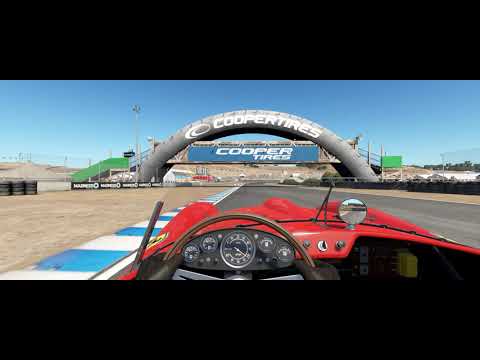
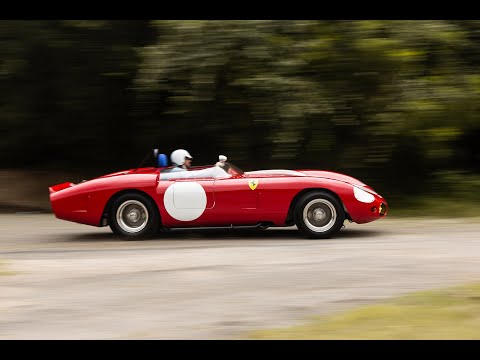
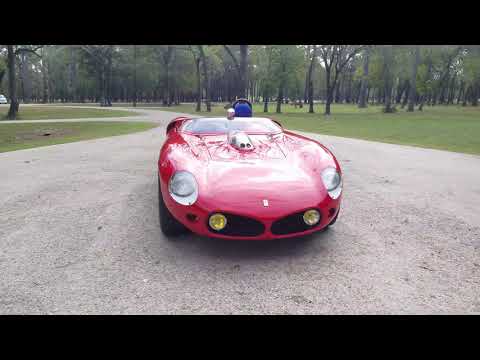
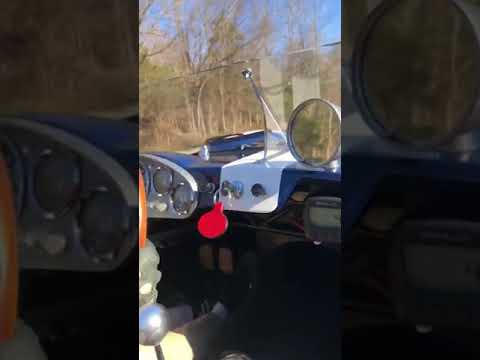
Ferrari 250 Testa Rossa from Selfridges in London 2nd December 2022 The Ferrari 250 Testa Rossa, or 250 TR, is a racing sports car built by Ferrari from 1957 to 1961. It was introduced at the end of the 1957 racing season in response to rule changes that enforced a maximum engine displacement of 3 litres for the 24 Hours of Le Mans and World Sports Car Championship races. The 250 TR was closely related to earlier Ferrari sports cars, sharing many key components with other 250 models and the 500 TR Overview : Manufacturer - Ferrari Also called - Ferrari 250 TR Ferrari Testa Rossa Production - 1957-1961 Assembly - Maranello Designer - Pinin Farina Fantuzzi Scaglietti Carlo Chiti Giotto Bizzarrini Body and chassis : Body style - Spyder Layout - Front mid-engine, rear-wheel-drive Related - Ferrari 250 Ferrari 500 TR Ferrari 500 TRC Powertrain : Engine - 3.0 L (2953.21 cc) Tipo 128 Colombo V12 Transmission - 4-speed manual 5-speed manual Dimensions : Wheelbase - 2,350 mm (92.5 in) Length - 3,959 mm (155.9 in) Width - 1,523 mm (60.0 in) Curb weight - 800 kg (dry) Chronology : Predecessor - Ferrari 500 TR Successor - Ferrari 250 P The 250 TR achieved many racing successes, with variations winning 10 World Sports Car Championship races including the 24 Hours of Le Mans in 1958, 1960, and 1961, the 12 Hours of Sebring in 1958, 1959 and 1961, the Targa Florio in 1958, the 1000 Km Buenos Aires in 1958 and 1960 and the Pescara 4 Hours in 1961. These results led to World Sports Car Championship constructor's titles for Ferrari in 1958, 1960 and 1961 The 250 Testa Rossa was initially developed to compete in the 1957 World Sportscar Championship racing season, in response to rule changes planned for the upcoming 1958 season that would enforce a maximum engine displacement of 3 litres. The objective was to improve on the existing 4-cylinder 2.0L 500 TR/500 TRC Testa Rossa by integrating the more powerful Colombo-designed 3.0L V12 as used in 250 GT series. Along with the new engine, Ferrari improved the existing Testa Rossa chassis and bodywork. As with other Ferrari racing cars, Enzo Ferrari demanded absolute reliability from all components, resulting in a somewhat conservative design approach that aimed for endurance racing success through durability rather than overall speed. Carlo Chiti was the chief designer during 250 TR development and his continual experimentation counterbalanced Mr. Ferrari's conservatism and led to the many revisions that kept the car competitive through 1962. Other Ferrari engineers had major contributions to the 250 TR, notably Giotto Bizzarrini, who helped with aerodynamic improvements for the 1961 season, and Andrea Fraschetti, who helped developed the first 250 TR prototype before his 1957 death during a test drive. The 250 TR was raced and continually developed by Scuderia Ferrari from 1957 through 1962. In total, 33 250 TRs of all types were built between 1957 and 1962. Included in this total are 19 "customer versions" of the 250 TR sold to independent racing teams, replacing the 500 TRC for this market. All customer cars had left hand drive Scaglietti "pontoon fender" bodies and live rear axles. They did not benefit from the continual improvements to Scuderia Ferrari cars, although many independent teams modified their 250 TRs or purchased ex-Scuderia Ferrari cars in order to stay competitive The 250 Testa Rossa engine was based on Colombo-designed 3.0L V12 used in 250 GT road and racing cars. Carlo Chiti and other Ferrari engineers made several modifications to increase the performance of this already proven engine. The starting point was a 1953-style cylinder block with an overall capacity of 2953 cc, a 73 mm bore and 58.8 mm stroke. Six two-barrel Weber 38 DCN carburetors fed the engine, increased from the 3 carburetors typical for 250 GT engines. The cylinder heads used single overhead cams, 2 valves per cylinder and helical double-coil valve springs (a first for Ferrari). The helical valve springs were much smaller than previously used torsion springs, allowing the cylinder heads to be strengthened and secured with 24 studs rather than 18 in previous 250 engines. This increased the overall reliability of the engine by improving head gasket sealing. One spark plug was used per cylinder and the position was changed from earlier 250 designs, now located outside the engine vee between exhaust ports. This allowed for a better spark position and more efficient combustion. Piston connecting rods were now machined from steel billet, rather than forged, which resulted in more stress-resistance at higher RPM. The cam covers were painted bright red, the source of the name "Testa Rossa" (literally, "Red Head"). This tradition and name originated with the 500 TR.
The Ferrari 250 Testa Rossa, or 250 TR, is a sports racing car built by Ferrari from 1957 to 1961. It was introduced at the end of the 1957 racing season in response to rule changes that enforced a maximum engine displacement of 3 litres for the 24 Hours of Le Mans and World Sports Car Championship races. The 250 TR was closely related to earlier Ferrari sports cars, sharing many key components with other 250 models and the 500 TR. The 250 TR achieved many racing successes, with variations winni...
More about Ferrari 250 Testa Rossa→Added
 57:27
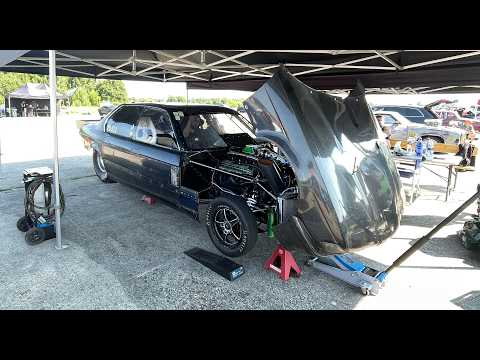
57:27BMW E32
 19:33
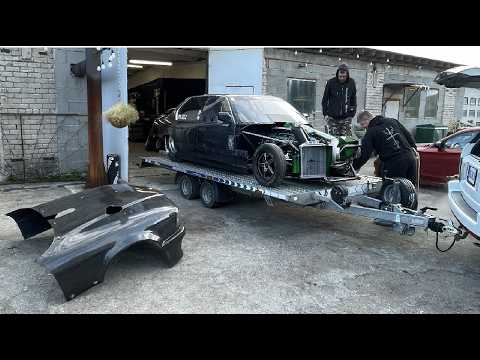
19:33BMW E32
 23:58
23:58BMW E32
 1:33:25
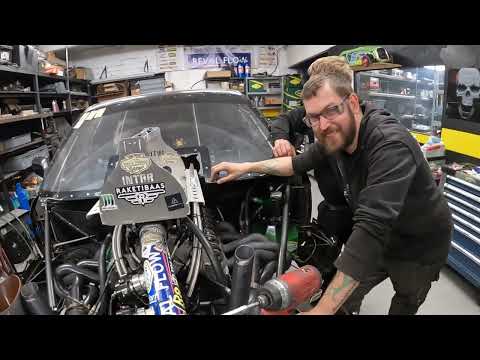
BMW E32
 2:10
2:10Ferrari 250 Testa Rossa, Ferrari, Ferrari 250, Car
 2:38
2:38Ferrari 250 Testa Rossa, Ferrari, Ferrari 250
 2:00
2:00Ferrari 250 Testa Rossa, Ferrari, Ferrari 250
 0:15
0:15Ferrari 250 Testa Rossa, Ferrari, Ferrari 250