0 views
Share this clip
Know someone who'd love this clip?
Share it with friends and fellow fans.
Share this clip
Know someone who'd love this clip?
Share it with friends and fellow fans.
Prof. Ferdinand Porsche was busy designing and developing his cars as early as 1896. The first fruit of his endeavors was an electric vehicle known as the Lohner-Porsche. It was driven by steered wheel-hub motors, and it caused a sensation at the Paris World Exhibition in 1900. This was soon followed by an even more impressive example of Prof. Porsche innovative spirit. A racing car boasting four wheel-hub electric motors became the world’s first all-wheel drive passenger car and marked the automotive engineering debut of four-wheel brakes. No less visionary was Prof. Porsche’s next idea; in 1900 he combined his battery-powered wheel hub drive with a petrol engine, thus creating the serial hybrid drive principle. Prof. Porsche had entered uncharted territory with the Semper Vivus, the world’s first functional, full-hybrid car. In this vehicle, two generators paired with petrol engines formed a single charging unit, simultaneously supplying electricity to wheel-hub motors and batteries. In autumn 1900, Prof. Porsche set to work on a first prototype with petrol-electric hybrid drive. Presumably he based the world’s full hybrid car on a conversion of his electric racing vehicle from the Semmering-Bergrennen race. To this end he combined his electrical wheel-hub motors with two combustion engines and no mechanical connection whatsoever to a drive axle. Instead, they each drove an electric generator supplying both the wheel-hub motors and accumulators with electricity. This was the birth of serial hybrid drive. As a full hybrid concept, the Semper Vivus was also able to cover longer distances purely on battery power until the combustion engine had to be engaged to recharge the batteries. To save weight and create room for a petrol engine, Prof. Porsche swapped the original 74-cell accumulator in his electromobiles for a smaller battery with only 44 cells. In the middle of the vehicle he installed two water-cooled 3.5 PS (2.6 kW) DeDion Bouton petrol engines -- driving two generators to create electricity -- each producing 2.5 hp (1.84 kW). Both engines operated independently, each delivering 20 amperes with a voltage of 90 volts. The electricity generated by the dynamos initially flowed to the wheel-hub motors, with the surplus power being sent on to the batteries. An added bonus was that it was also possible to use the generators as electric starter motors for the petrol engines by reversing the direction of rotation. In practice, Prof. Porsche still had to contend with the principal problem of his wheel-hub cars â€" the vehicle’s heavy weight. Although the Semper Vivus hybrid car’s total weight was only 70 kg more than the original version, the 1,200 kg prototype was a challenge for the pneumatic tires’ soft rubber mix. In other respects as well the hybrid concept was still a long way away from being ready for series production. With its bodiless chassis, exposed petrol engines and unsprung rear axle, the Semper Vivus may have impressed visitors to the Paris Motor Show in 1901 but potential car buyers must have felt the bare-bones prototype was not for them. The interaction of engine, batteries and control system also still needed a lot of development and in addition to the ambitious control technology, a constant problem was dirt being thrown up and fouling of the accumulators. Yet the hybrid concept pointed to new possibilities that Prof. Porsche resolutely set about turning into reality. In 1901 Prof. Porsche developed the revised concept of his ‘petrol-electric hybrid car’ into a variant that was ready for series production under the Lohner-Porsche Mixte name (borrowing the French term ‘voitures mixtes’). With a four-cylinder, front-mounted engine, this model mirrored the Mercedes vehicle concept just recently designed by Wilhelm Maybach but with its two wheel-hub motors still conforming to the concept of a serial hybrid car. Prof. Porsche was now using a powerful 5.5-liter, 25-hp (18 kW) four-cylinder engine from the Austrian Daimler engine company as an electrical generator. The engine was connected by a driveshaft to the electric generator located under the seat, with control handled by a primary controller next to the steering wheel. Get More Great Car Videos - Subscribe: https://goo.gl/BSIaFc
Maybach (German: [ˈmaɪbax] , MY-baakh) is a German luxury car brand owned by Mercedes-Benz. The original company was founded in 1909 by Wilhelm Maybach and his son Karl Maybach, originally as a subsidiary of Luftschiffbau Zeppelin GmbH, and it was known as Luftfahrzeug-Motorenbau GmbH until 1999. In 1960, Maybach was acquired by Daimler-Benz. The name returned as a standalone ultra-luxury car brand in 2002, sharing significant components with Mercedes-Benz cars. In 2013, after slow sales, Mayba...
More about Maybach→Added
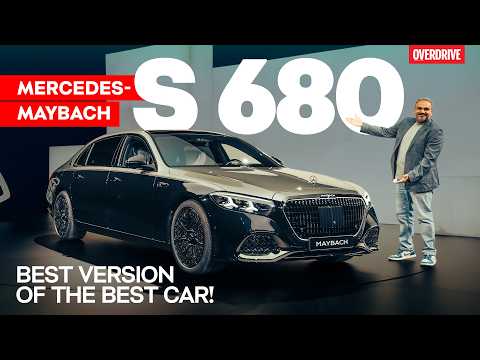 7:23
7:23Maybach, Wheelbase, Automobile, Mercedes-Maybach, SEAT, video, Mercedes-Benz, Car, vide
 4:41
4:41Maybach, Lamborghini, Automobile, Ferrari, Supercar, Performance car, Mercedes-Maybach, Ford EXP, Luxury car, Sports car, video, Car, Vehicle, Van, vide, Koenigsegg, video i, Luxury vehicle
 0:10
0:10Maybach, Fuel efficiency, rall, SEAT, video, Car, Vehicle, Van, vide
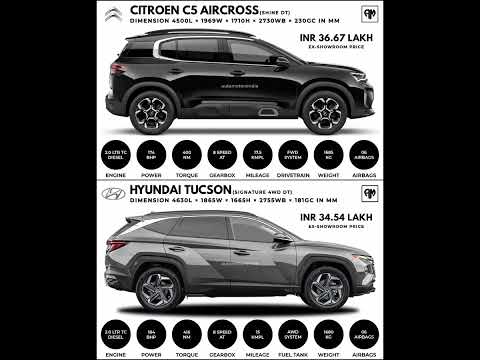 0:06
0:06Ferrari P, Ferrari Purosangue, Maybach, Force Gurkha, Renault, KTM, Ferrari, Volvo XC90, Lincoln Navigator, SEAT, Suzuki, BMW, Car, Koenigsegg, Tata Punch