0 views
Share this clip
Know someone who'd love this clip?
Share it with friends and fellow fans.
Share this clip
Know someone who'd love this clip?
Share it with friends and fellow fans.
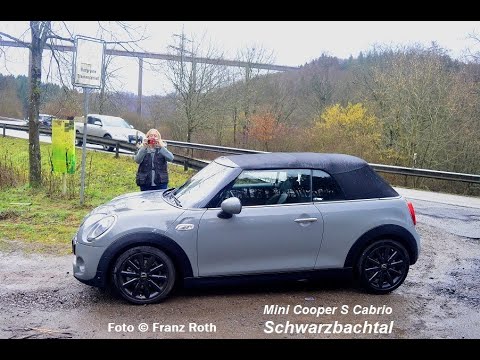
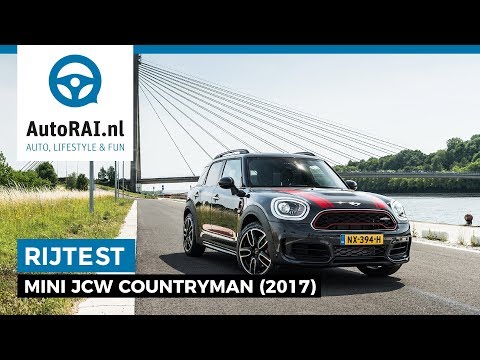
The Mini Hatch (stylized as MINI hatch, or MINI Hardtop in the US), also known as Mini Cooper, Mini One, or simply the Mini, is a three-door hatchback first introduced in late 2000, with a second generation launched in 2006 and a third generation model launched in 2014. A convertible version was introduced in 2004, with the second generation following in 2008. The Mini Hatch was the first model launched by BMW under the Mini marque after the original Mini was discontinued in 2000. The new model built by BMW is technically unrelated to the former. The Mini is produced in Cowley, Oxfordshire, UK, at Plant Oxford, and, since July 2014, at VDL Nedcar in Born, Netherlands. The mini convertible is, since 2015, only assembled in The Netherlands. The first new generation Mini Hatch was introduced in late 2000, being the first model launched under the Mini marque after the original Mini was discontinued in the same year. In some European markets, the Mini One was powered by a 1.4-litre (85 cu in) inline-four version of the Tritec engine, but all other petrol powered Minis used the 1.6-litre (98 cu in) version. From 2004 through 2008, the soft-top convertible R52 was made. There are numerous styling and badging differences between the models, including the Cooper S having a distinctive scoop cut into the bonnet. The Cooper S also has twin exhausts which exit under the centre of the rear valance. The non-S Cooper has more chrome parts than the Mini One and has a single exhaust. The Mini One D has no visible exhaust pipes at all. In some markets, such as Australia and the US, only the Mini Cooper and Cooper S are offered. Other trim lines of note, sold in varying markets around the world, are the Mini Seven, Mini Park Lane, Mini Check Mate, and Mini Monte Carlo. The Mini Hatch (US: Hardtop) was designed by Frank Stephenson, and drew inspiration from the original two-door Mini. Development of the car was conducted between 1995 and 2001 by Rover Group in Gaydon, United Kingdom and BMW in Munich, Germany. During this development phase, there was continual contention between the two design groups, especially concerning the positioning of the car; Rover wanted a straight economy car, whilst BMW supported a small, sporting car. Ultimately, BMW prevailed, and in 1999, they assumed control over the entire project following the departure of BMW's CEO, Bernd Pischetsrieder. When BMW sold off Rover in 2000, it retained the Mini project, and moved the planned production site of the car from Rover's Longbridge plant, to BMW's Oxford plant in Cowley, Oxford, England. The team of designers working on the 2001 Mini had finished the full-sized clay mock-up of the Mini in plenty of time for a presentation to the board of directors. However, the American chief designer, Frank Stephenson, realised that the model did not have an exhaust pipe. His short-term solution was to pick up an empty beer can, punch a hole in it, strip off the paint and push it into the clay at the back of the car, which took just a few minutes. The overall design for the mock-up was so good that the board members told him not to change a thing, resulting in the distinctive exhaust tip seen in production cars. The first generation of the new Mini received a facelift in July 2004 for the upcoming 2005 model year. This was also when the new convertible was introduced; it was never available with the pre-facelift design. Aside from minor design changes (mostly up front) and improved equipment, the Rover R65 manual gearbox was replaced with a Getrag five-speed. The vehicles produced during the 2001 to 2006 model years included four hatchback models (UK and some international markets: Hatch, US: Hardtop, other markets just plain Mini): the standard "Mini One", the diesel-engined "Mini One/D", the sportier "Mini Cooper" and the supercharged "Mini Cooper S"; in 2005, a convertible roof option was added to the Mk I line-up. In November 2006, BMW released a facelift version of the Mini Hardtop as a 2007 model-year vehicle. From March 2002, the Mini was exported to Japan and sold at Japanese BMW dealerships as well as Yanase locations. The car complied with Japanese Government dimension regulations and the introduction of the Mini coincided with several vehicles in Japan that exhibited a retro look that Japanese car companies were offering. The names Cooper and Cooper S are the names used for the sportier version of the classic Mini, which in turn come from the involvement of John Cooper and the Cooper Car Company. The Cooper heritage is further emphasised with the John Cooper Works (JCW) range of tuning options. The John Cooper Works company also created a higher spec model of the Mini Cooper S, the Mini Cooper S Works. It has a higher volume exhaust and air filter, and uprated brakes and suspension, and different 17-inch (430 mm) wheels than the S models.
VDL Nedcar was an automotive manufacturing company in Born, Netherlands. It was the largest automotive factory in the country, with a production capacity of 240,000 vehicles a year. VDL Nedcar was closed in March 2024 because the contract with BMW Group was not renewed. The company had its origins in a DAF car factory which opened in 1968. It was then owned by Volvo Cars and produced Volvo cars, then in the 1990s also produced Mitsubishi cars after a joint venture with Mitsubishi Motors and the ...
More about VDL Nedcar→Added