0 views
Share this clip
Know someone who'd love this clip?
Share it with friends and fellow fans.
Share this clip
Know someone who'd love this clip?
Share it with friends and fellow fans.
Subscribe for more New Car / Supercar / Concept Car / Auto Show videos http://www.youtube.com/user/newcarview?sub_confirmation=1 The future of Aston Martin is epitomised by the all-new DB9, a 2+2 seater sports car that sets new standards in its class due to its astonishing combination of agility, V12 power, smoothness, beautiful design and hand craftsmanship. Using a radical new aluminium-bonded body frame, the DB9 is one of the most sophisticated and technically advanced sports cars in the world. It is powered by the latest version of Aston Martin's 6.0-litre V12, producing 450bhp and a top speed of 186mph. Yet the DB9 is significant well beyond being a class-leading sports car. It is the beginning of a new era for Aston Martin. It is the first car to be hand-made at Aston Martin's new state-of-the-art facility in Gaydon, Warwickshire, where all future Aston Martin models will be developed and built. 'Gaydon is the future of Aston Martin,' says Dr Ulrich Bez, CEO of Aston Martin. It combines cutting-edge high technology with hand-craftsmanship and tradition. It is probably the best facility of its type in the world, and the perfect showcase for how to design and build innovative sports and GT cars for the 21st Century. All cars built at Gaydon will be based on Aston Martin's new VH [Vertical Horizontal] platform. It's the first time in our history that we have had a totally flexible yet dedicated Aston Martin platform. The DB9 is the first car to use it making it the most important Aston Martin ever. In a long list of technological innovations, the most important is the bonded aluminium frame. Aston Martin believes it is the most structurally efficient body frame in the car industry. The new Aston Martin VH (vertical horizontal) aluminium structure gives immense benefits. It is very light, aiding performance, handling, economy and durability. It is also enormously strong. Despite being 25 percent lighter than the DB7 bodyshell, the DB9 structure has more than double the torsional rigidity. This is the car's backbone, the skeleton to which all the mechanical components are either directly or indirectly mounted. Drawing on the experience and technology pioneered in the Vanquish, the DB9's frame is made entirely from aluminium. Die-cast, extruded and stamped aluminium components are bonded using immensely strong adhesives, supplemented by mechanical fixing using self-piercing rivets. Test drive review driving burnout crash test drifting engine engineering performance Ferrari concept car lammborghini Porsche Mercedes-benz v12 2014 2015 hybrid technology billionaire millionaire super rich luxury The frame is made in aluminium and the body panels are then fitted, again using adhesives, in the advanced body assembly area at Aston Martin's new Gaydon facility. This adhesive is applied by a robot - the only one at Aston Martin. Computer controlled hot-air curing ensures the highest standards of accuracy and repeatability. The bonding has enormously high stiffness, so that shakes and rattles are obliterated. Bonding also has excellent durability offering better stress distribution than welding - which is more prone to crack. The process is also used in the aircraft industry and Formula One. In addition to the aluminium frame, other lightweight or high-technology materials are used extensively. The bonnet, roof and rear wings are aluminium. The front wings and bootlid are composite. Cast aluminium is used in the windscreen surround, another industry first. Magnesium alloy, which is even lighter than aluminium, is used in the steering column assembly and inner door frames. The driveshaft is made from carbon fibre. It is part of the torque tube that rigidly connects the front engine to the rear gearbox. This arrangement helps the DB9 achieve perfect 50:50 weight distribution, further improving handling. The DB9 uses all-round independent double-wishbone suspension. As the body frame is brand new, the chassis designers were able to start from scratch - rather than be forced to develop a suspension for an adapted saloon car platform. The front suspension is mounted on a cast aluminium subframe. At the rear, another subframe carries the rear suspension as well as the rear transaxle. Forged aluminium wishbones are used front and rear, as are aluminium-bodied dampers. This is rare, even on top-end sports and GT cars. The steering rack is mounted ahead of the front wheels, which provides better control under extreme steering loads and heavy braking. Magnesium alloy is used in the construction of the steering column. Even the wheels have been specially designed to save weight. The 19-inch alloys are made using flow forming rather than casting. Read more at http://www.supercars.net/cars/2424.html#B6Z6Tbt0Z9EzkrKY.99
Ulrich Helmut Bez is a German businessman and was, until the end of 2013, chief executive officer of Aston Martin motorcars when he stepped down to serve as non-executive chairman.
More about Ulrich Bez→Added
 2:00
2:00Ulrich Bez
 21:11
21:11Ulrich Bez
 2:23
2:23Ulrich Bez
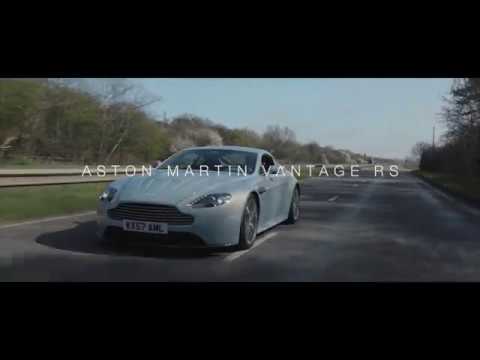 3:49
3:49Ulrich Bez
 0:07
0:07orange lamborghini
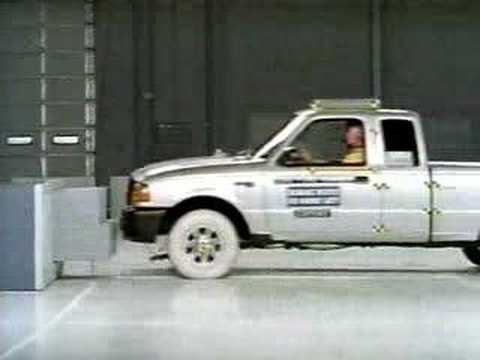 0:56
0:56Mazda B series
 6:12
6:12Rear-wheel drive, Plug-in hybrid, Toyota, SEAT, SUV, Mazda, PHEV, video, WiLL, Car, Vehicle, Van, Crossover SUV, vide
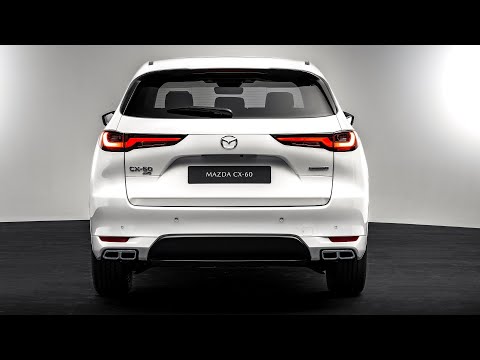 6:07
6:07Mid-size crossover