0 views
Share this clip
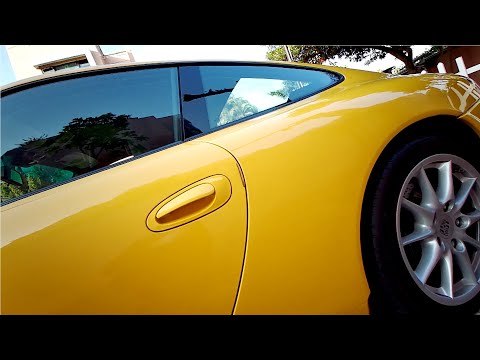
BEST Twin Turbo Porsche 911! This 996 911 is nothing but raging horsepower and screaming turbos.
Know someone who'd love this clip?
Share it with friends and fellow fans.
Share this clip
Know someone who'd love this clip?
Share it with friends and fellow fans.
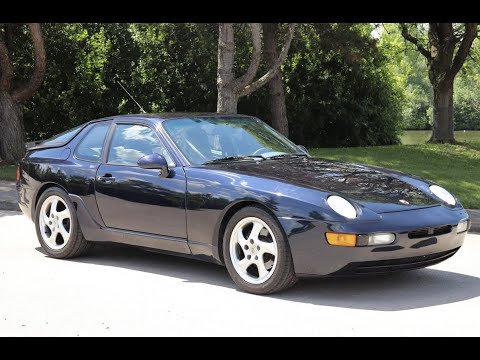
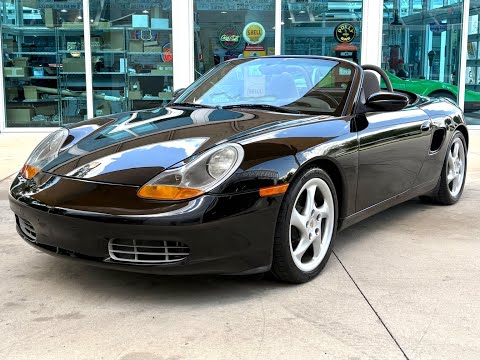
The Porsche 996 911 is one of the greatest cars ever built. Currently, you can still purchase a twin turbo charged Porsche for a reasonable price. Need for speed? This car is the best bang for your buck. Don't buy a yellow Lamborghini. Buy this instead. Run with exotics for a third of the price. Porsche has a long history of performance and this 911 is representing the company well. See german engineering at its finest as Modern Greaser takes you for a spin in this sweet ride. YouTube car videos have become far too serious these days. Let MG put a comical spin on things with his less the extensive knowledge of cars. Watch as he pretends to educate you all about amazing cars, but basically ends up looking like a dumb dumb. Each car review comes with it's own 12 hour idle video in case you need some sweet engine idle to lull you into a deep state of relaxation or sleep. The Porsche 996 is the internal designation for the 911 model manufactured from 1997 to 2006[1] It was replaced by the 997 in 2004 but the high performance Turbo S, GT2 and GT3 variants remained in production until 2006. The 996 had little in common with its predecessor, with the first all new chassis platform since the original 911 and a new water-cooled engine. Technically, it was a major change, a complete breakthrough from the original car other than the overall layout. Development was shared with its entry-level sibling, the roadster-only Boxster which was introduced around the same time, including the front suspension, various interior components, and the engine, all of which were enlarged for the 996. However, the multi-link rear suspension was derived from the preceding 993. This was done mainly to save development costs as Porsche was facing financial troubles at that time. This move resulted in cost savings of approximately 30% in the development of the car.[2] At its debut, the 996 featured the most significant change from the classic 911 series: a water-cooled engine replacing the previously air-cooled engine. Progressively stringent emissions and noise regulations, environmental concerns, a higher expectation for refinement and the need for a high-performance 4 valve per cylinder engine made the switch necessary. Other major changes include a completely new platform having a sleeker body with a more raked windshield, and a re-designed interior along with new "fried egg" shaped headlamps (so called due the amber coloured turn signals) instead of previous "bug eye" headlamps During the 1990s, Porsche was facing financial troubles and rumours of a proposed takeover were being spread. The signature air-cooled flat-6 of the 911 was reaching the limits of its potential as made evident by the 993. Stricter emissions regulations world wide further forced Porsche to think of a replacement of the air-cooled unit. In order to improve manufacturing processes, Porsche took the aid of leading Japanese car manufacturer Toyota whose consultants would assist in the overhaul of the Zuffenhausen manufacturing facility introducing mass production techniques which would allow Porsche to carry out production processes more efficiently. Porsche had realised that in order to keep the 911 in production, it would need radical changes. This led to the development of the 996. The sharing of development between the new 911 and the entry level Boxster model allowed Porsche to save development costs. This move also resulted in interchangeable parts between the two models bringing down maintenance costs.[2] The Porsche 996 was a new design developed by Pinky Lai under Porsche design chief Harm Lagaay from 1992 to 1994;[4] it was the first 911 that was completely redesigned, and carried over little from its predecessor as Porsche wanted the design team to design a 911 for the next millennium. Featuring an all new body work, interior, and the first water-cooled engine, the 996 replaced the 993 from which only the front suspension, rear multi-link suspension, and a 6-speed manual transmission were retained in revised form. The 996 had a drag coefficient of Cd=0.30 resulting from hours spent in the wind tunnel. The 996 is 185 mm (7 in) longer and 40 mm (2 in) wider than its predecessor. It is also 45% stiffer courtesy of a chassis formed from high-strength steel. Additionally, it is 50 kg (110 lb) lighter despite having additional radiators and coolant.[2]
Harm Lagaaij (anglicized as Harm Lagaay; born 28 December 1946) is a Dutch automobile designer.
More about Harm Lagaay→Added
 5:11
5:11Nissan Patrol
 27:31
27:31Nissan, vide
 0:25
0:25Nissan Patrol
 23:40
23:40Nissan Patrol