0 views
Share this clip
Ford Escape Higher-quality
Know someone who'd love this clip?
Share it with friends and fellow fans.
Share this clip
Know someone who'd love this clip?
Share it with friends and fellow fans.
Ford figured out the SUV better than most, first with the mid-size Explorer, later with the compact Escape. Since Dearborn’s boxy baby rolled forth in 2000, more than 2 million have been sold, with only modest design and engineering updates. Last year, when the original platform was on its last legs, the Escape was still America’s most popular SUV, with more than a quarter-mil- lion sales. Thanks, incentives. Through March of this year, Honda’s CR-V is top dog, at least until the 2013 Escape builds momentum. From the plant that builds it to the fresh interior and exterior, everything about Ford’s compact crossover is new. In place of the platform co-developed with Mazda, this Escape shares Focus underpinnings and a basic design sold as the Kuga in china, Europe, and other markets. The manual transmission, V-6 engine, and hybrid powertrain are all purged from the program. (The coming Ford c-Max, a close cousin to the Escape, will be all-hybrid.) Two new EcoBoost inline-fours bolster the Escape’s base carry-over 2.5-liter: the turbocharged 1.6-liter produces 178 horsepower, and the blown 2.0-liter is rated at a strapping 240. A six-speed automatic is now standard with all three engines whether you opt for front- or four-wheel drive. The Escape’s new duds are stylish and contemporary. The sweptback windshield blends smartly into the airfoil-shaped roof. A tasteful assortment of ribs and creases adds character to the nose and flanks. Headlamps defining the front corners, blacked- out bumpers, and diagonal spars that start low and run over the hood and up the wind- shield pillars make the best of the Escape’s tall, narrow proportions. The cargo hold—the reason for any SUV’s existence—swallows 68 cubic feet of stuff with the rear seatbacks folded and 34 with them upright. That tops the ’12 Escape by one and three cubic feet, respectively, but falls short of the CR-V in both modes by three cubic feet. One handle releases each rear-seat section, allowing the cushion to swing forward and the backrest to drop in one motion. While dozens of SUVs offer a pleasant interior mood, few excel in driving dynamics. This is where the new Escape scores major points, largely because of the capable chassis components that underpin it. Nudge the steering wheel, and its Focus-like willingness to change direction reads through loud and clear: the front tires bite; the nose rotates into the bend. But the Escape’s center of gravity is 4.5 inches higher than the Focus’s, so steering response suffers from a slight two-step effect: the body bobs a bit before taking a stable set during aggressive turning. Pressed to its limit on a 300-foot skid-pad, the Escape cornered at 0.81 g with manageable understeer and a reasonable list angle. That performance not only beats the previous Escape’s by a wide margin, it’s better than that of the eight other contenders in our last compact-SUV comparison test [February 2010]. The electrically assisted power rack-and-pinion steering is slack-free on center, and its effort builds nicely during turning. Unfortunately, practically all feed-back from the tires and road is lost en route to the steering wheel. Back seat is roomy, but thin bottom cushions will prompt whining. The Escape’s 3804-pound curb weight is at the high end of the compact-crossover league, suggesting that no 2.0-liter four-cylinder could possibly move this vehicle around at a lively pace. But Ford’s turbocharged four surprises. It thrives from a triple whammy of variable valve timing, direct fuel injection, and a healthy dose (17.0psi) of boost. The torque curve rises smartly from idle to do its best work between 2000 and 4000 rpm. When pressed, this engine hustles to its 6500-rpm redline without com- plaint, yielding a 0-to-60 run in seven seconds flat and a 90-mph quarter-mile in 15.3. While the temptation to dip into the ready reserve of internal-combustion enthusiasm drove our observed mileage to 19 mpg, the Escape’s most potent power-train is a good 20 percent more fuel efficient than the 3.0-liter V-6 it replaces. Though the turbo four burns regular gas and has the same 3500-pound maximum tow rating as before, premium is required to unleash the full 240 horsepower. Those who can do with less towing ability and vitality should opt for the 1.6-liter turbo, which achieved 33 highway mpg (with front drive) i http://youtu.be/ihJsuUqxcg4
Mid-size, also known as intermediate, is a vehicle size class which originated in the United States and is used for cars larger than compact cars and smaller than full-size cars. "Large family car" is a UK term and a part of the D-segment in the European car classification. Mid-size cars are manufactured in a variety of body styles, including sedans, coupes, station wagons, hatchbacks, and convertibles. Compact executive cars can also fall under the mid-size category.
More about Mid-size→Added
 3:05
3:05Mid-size, Motorcycle, rall, SEAT, BMW, video, vide
 9:00
9:00Mid-size, Toyota, Toyota Crown (RS), Toyota Crown, video, Toyota Hybrid X, Van, vide
 5:06
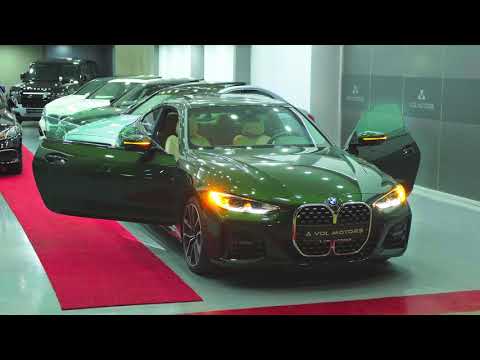
5:06Mid-size, Hatchback, Nota, Rear-wheel drive, Mercedes-Benz C-Class, SEAT, BMW, BMW 4 Series, Lexus, WiLL, Mercedes-Benz, Car, Van, vide
 15:34
15:34Mid-size, SUV, BMW, video, Car, Mid-size SUV, vide