0 views
Share this clip
Ferrari Dino 246 GTS - 1969
Know someone who'd love this clip?
Share it with friends and fellow fans.
Share this clip
Know someone who'd love this clip?
Share it with friends and fellow fans.
Dino was a marque for mid-engined, rear-drive sports cars produced by Ferrari from 1968 to 1976. Used for models with engines with fewer than 12 cylinders, it was an attempt by the company to offer a relatively low-cost sports car. The Ferrari name remained reserved for its premium V-12 and flat 12 models until 1976, when "Dino" was retired in favour of full Ferrari branding. Named to honour Ferrari founder Enzo Ferrari's son and heir Dino Ferrari, the Dino models used Ferrari racing naming designation of displacement and cylinder count with two digits for the size of the engine in deciliters and the third digit to represent the number of cylinders, i.e. 246 being a 2.4-litre 6-cylinder and 308 being a 3.0-litre 8-cylinder. Ferrari street models of the time used a three-digit representation of the displacement in cubic centimeters of one of the 12 cylinders, which would have been meaningless in a brand with differing numbers of cylinders. The Dino 246 was the first Ferrari model produced in high numbers. It is lauded by many for its intrinsic driving qualities and groundbreaking design. In 2004, Sports Car International placed the car at number six on its list of Top Sports Cars of the 1970s. Motor Trend Classic placed the 206/246 at number seven in their list of the 10 "Greatest Ferraris of all time". The "Dino" marque was created to market a lower priced, "affordable" sports car capable of taking on the Porsche 911. Ferrari's expensive V12's well exceeded the 911 in both performance and price. Enzo did not want to diminish his exclusive brand with a cheaper car, so the "Dino" was created. The name "Dino" honours the founder's late son, Alfredo "Dino" Ferrari, credited with designing the V6 engine used by the marque. Along with famed engineer, Vittorio Jano, Dino influenced Enzo Ferrari's decision to produce a line of racing cars in the 1950s, with V6 and V8 engine designs. History shows that Alfredo Ferrari did not have a hand in the actual design of the V6 motor that made its way into the Dino. Ferrari wished to race in the new 1.6 L Formula 2 category in 1967 with the Dino V6 engine. However, the company could not meet the homologation rules which called for 500 production vehicles using the engine to be produced. Enzo Ferrari therefore asked Fiat to co-produce a sports car using the V6, and the front-engined, rear-drive Fiat Dino was born. It used a 2.0 L (1987 cc) version of the Dino V6, allowing Ferrari to compete in the category. At the time, the thought of using a mid-engine layout in a production car was quite daring, although the design was common in the world of sports car racing. A mid-engined layout placed more of the car's weight over the driven wheels, and allowed for a streamlined nose, but led to a cramped passenger compartment and more challenging handling. Lamborghini created a stir in 1966 with its mid-engined Miura, but Enzo Ferrari felt that a mid-engine Ferrari would be unsafe in the hands of his customers. Eventually he relented, and allowed designer Sergio Pininfarina to build a mid-engined concept for the 1965 Paris Motor Show, but demanded that it wear the Dino badge alone. The 1966 Turin car show featured a refined Dino 206S. The Turin 206S was a closer prototype to the actual production version. Response to the radically styled car was positive, so Ferrari allowed it to go into production, rationalizing that the low-power V6 engine would keep his customers out of trouble. Calls for more power were answered with the 2.4 L (2418 cc) Dino 246. The motor was a 65-degree, dual-overhead-camshaft, 9.0:1 compression ratio, iron block with alloy heads. The European motor produced 195 bhp (at 7,600 rpm), and was available as a fixed-top GT coupe or, after 1971, an open Spyder GTS. The American version had an exhaust air-pump, and timing changes which created 175 hp (130 kW). The GT had 3 Weber 40 DCNF/6 or 40 DCNF/7 carburetors. For the 246 a new version of the Dinoplex ignition was deployed, the more compact Magneti Marelli AEC103A system. The 246 Dino GT weighed 2,380 lb (1,080 kg). The 246 Dino GTS weighed 2,426 lb (1,100 kg). The body was now made of steel to save cost. The 246 Dino had a 2.1-inch (53 mm) longer wheelbase than the 206, at 92.1 inches. The height of the 246 was the same as the 206 at 43.9 inches. Dino 246 production numbered 2,295 GTs and 1,274 Spyders, the latter being built from 1972 to 1974 only, for a total production run of 3,569. Three series of the Dino were built, with differences in wheels, windshield wiper coverage, and engine ventilation. The Series I cars, 357 of which were built until the summer of 1970, used the same center-bolt wheels as did the 206. Series II cars (built until July 1971 in 507 examples) received five-bolt Cromodora alloys and "clap-hands" wipers.
The Porsche 911 model series (pronounced Nine Eleven or in German: Neunhundertelf, or colloquially Neunelfer) is a family of two-door, high performance rear-engine sports cars, introduced in September 1964 by Porsche of Stuttgart, Germany, and now in its eighth generation. All 911s have a rear-mounted flat-six engine, and usually 2+2 seating, except for special 2-seater variants. Originally, 911s had air-cooled engines, and torsion bar suspension, but the 911 has been continuously changed and im...
More about Porsche 911→Added
 0:16
0:16Porsche 911, Lexus GS, Toyota Tacoma, Ferrari F50, Porsche 911 GT3, Lamborghini, Ferrari, Supercar, Porsche Taycan, Toyota 4Runner, Nissan GT-R, Toyota, Honda Accord, Lexus LFA, rx7, Lexus IS, Ferrari Roma, Ferrari F40, Porsche, Mazda, Subaru, Luxury car, Lexus LF, Ferrari F8, BMW, Ferrari FF, Ferrari F12, Ferrari 599, Toyota Camry, Lamborghini Gallardo, Lexus, Honda S2000, Car, Porsche 911 GT2, Truck, Ferrari 488, Lamborghini Aventador, Porsche Carrera GT, Nissan, Ferrari 458, Porsche 718, Muscle car, Toyota Supra, Lamborghini Urus, Ford GT, Honda Civic
![Thumbnail for *EXPENSIVE* CAR SHOW-OFF FAILS [BAD DRIVERS!] by Porsche 911, Porsche 911 GT3, Lamborghini, Ferrari, Supercar, LaFerrari, United States, Porsche, Mazda, Subaru, BMW, video, WiLL, Car, Ferrari 488, Lamborghini Aventador, Ferrari 458, vide, Ford GT](https://img.youtube.com/vi/ZbNUUuW1ZQE/hqdefault.jpg) 10:29
10:29Porsche 911, Porsche 911 GT3, Lamborghini, Ferrari, Supercar, LaFerrari, United States, Porsche, Mazda, Subaru, BMW, video, WiLL, Car, Ferrari 488, Lamborghini Aventador, Ferrari 458, vide, Ford GT
 24:23
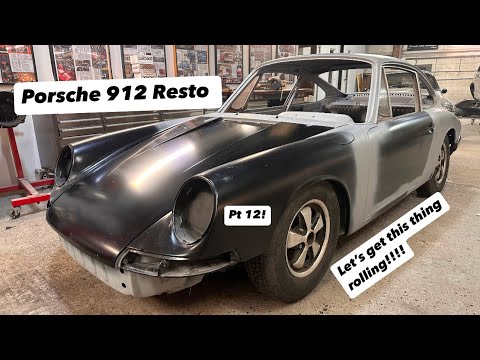
24:23Porsche 911, Porsche, Porsche 912, video, Car, vide
 5:46
5:46Porsche 911, FIA, Renault, Lamborghini Murciélago, Lamborghini, Mercedes-Benz SLS AMG, Fiat, Toyota, Chevrolet, rx7, Lexus IS, Porsche, Mazda, Subaru, BMW, Volkswagen, Ford Mustang, Lamborghini Gallardo, Lexus, Mercedes-Benz, Car, Porsche 911 GT2, Porsche Carrera GT, Mercedes-Benz SLR McLaren, Nissan, Koenigsegg, Toyota Supra, Ford GT