0 views
Share this clip
Porsche Panamera GTS - Interior and Exterior Walkaround
Know someone who'd love this clip?
Share it with friends and fellow fans.
Share this clip
Know someone who'd love this clip?
Share it with friends and fellow fans.
The Porsche Panamera is an executive car (E-segment in Europe) manufactured by the German automobile manufacturer Porsche. It is front-engined and has a rear-wheel-drive layout, with all-wheel drive versions also available. It is the only sedan manufactured by Porsche as part of its strategy of expanding its market. The production version of the Porsche Panamera was unveiled at the 13th Auto Shanghai International Automobile Show in Shanghai, China, on April 2009. In 2011, hybrid and diesel versions were launched. In April 2013, a facelift to the Panamera was announced, making its debut again at the Shanghai Auto Show. A plug-in hybrid version, the Panamera S E-Hybrid, was released in the U.S. market in November 2013. The Panamera range received a re-design in 2016. The Panamera's name is derived, like the Porsche Carrera lineage, from the Carrera Panamericana race. The Panamera is generally considered to be the long-awaited fruit of Porsche's 989 concept vehicle from the late 1980s. Like the Porsche Cayenne SUV (which has become the marque's best-selling vehicle), the Panamera upset many Porsche purists, since it was seen as an attempt to broaden Porsche's appeal beyond that of hardcore fans. The Panamera ran contrary to the company's signature offerings, particularly its light two-door rear-engine sports cars like the 911. The Panamera on the other hand is considered a full-size luxury car, weighing nearly 4,000 pounds (1,800 kg), with four doors, and its engine mounted in the front. The Panamera's appearance with its long hood and rear hatch bears resemblance to a stretched 911. The 911 has a sparse interior, as it was focused on raw performance, while the Panamera has a sumptuous interior loaded with modern technological amenities and expensive leather upholstery. The V8-powered Panamera S, 4S, and Turbo models were the first versions that debuted in 2009. In addition to the 4.8L Twin Turbo 507 PS (373 kW; 500 hp) V8 powered models, Porsche launched two further models in 2010: the Panamera and Panamera 4 which are both powered by 3.0-litre and 3.6-litre V6 engines producing 304 PS (224 kW; 300 hp). Being derived from the V8 engine of the Panamera S and Panamera 4S, the V6 retains the V8's technologies like Direct Fuel Injection, infinitely variable intake camshaft adjustment with variable valve lift (VarioCam Plus), an on-demand oil pump, water cooling with thermal management, a variable intake manifold, as well as integrated dry sump lubrication with two-stage extraction of oil, and an Auto Start-Stop function (only with the PDK transmission). Turbo version uses active aerodynamics with a multi-stage, adjustable rear spoiler. Optional Sports Chrono Packages include a Sport Plus button, which has tighter damping and air springs, and lowers the car's body by 25 mm (1.0 in). In 2011, the Panamera S Hybrid, Diesel, Turbo S, and GTS variants were added to the range. The GTS achieves a lateral acceleration of 0.96g. The Panamera, S, Hybrid and Diesel models are rear-wheel drive, while the Panamera 4, 4S, and GTS have the same four-wheel drive system as the Turbo and Turbo S, called Porsche Traction Management (PTM). The Panamera featured Adaptive air suspension, the Porsche Dynamic Chassis Control (PDCC), active anti-roll bars and the Porsche Active Suspension Management (PASM). In 2008, Porsche AG announced the development of a parallel hybrid system for the Panamera, and in February 2011, Porsche unveiled the Panamera S Hybrid. Using the same drivetrain seen in the Cayenne S Hybrid—an Audi-sourced supercharged 3.0-litre V6 engine producing 333 PS (245 kW; 328 hp) along with an electric motor rated at 47 PS (35 kW; 46 hp), as well as the Cayenne's 8-speed Tiptronic S transmission—the 380 PS (279 kW; 375 hp) Panamera S Hybrid could accelerate from 0–62 mph in 6.0 seconds. The Panamera S Hybrid produced only 193 grams of carbon dioxide per kilometre, rendering it the most environment friendly car in the then entire Porsche model range, while still maintaining a top speed of 167.8 mph (270 km/h). Deliveries began in the United States in 2011, and cumulative sales reached 684 units through March 2013. The U.S. Environmental Protection Agency (EPA) rated the fuel economy for the 2013/2012 model year Panamera Hybrid at 22 mpg‑US (11 L/100 km; 26 mpg‑imp) for city driving, 30 mpg‑US (7.8 L/100 km; 36 mpg‑imp) for highway, and 25 mpg‑US (9.4 L/100 km; 30 mpg‑imp) combined. Porsche announced its updated Panamera on 3 April 2013, with a scheduled formal launch at Auto Shanghai. The revised model can be identified by new front and rear bumpers. Technical changes included the addition of a new 3.0L twin-turbocharged Panamera S and a new E-Hybrid model. A long wheelbase version with an additional 150 mm was available for selected left-hand drive markets. The Turbo S version followed up in 2014. The long wheelbase versions were only available on 4S, Turbo, and Turbo S models.
A sport utility vehicle (SUV) is a car classification that combines elements of road-going passenger cars with features from off-road vehicles, such as raised ground clearance and four-wheel drive. There is no commonly agreed-upon definition of an SUV, and usage of the term varies between countries. Thus, it is "a loose term that traditionally covers a broad range of vehicles with four-wheel drive." Some definitions claim that an SUV must be built on a light truck chassis; however, broader defin...
More about SUV→Added
 28:43
28:43BMW E32
 4:17
4:17BMW E32
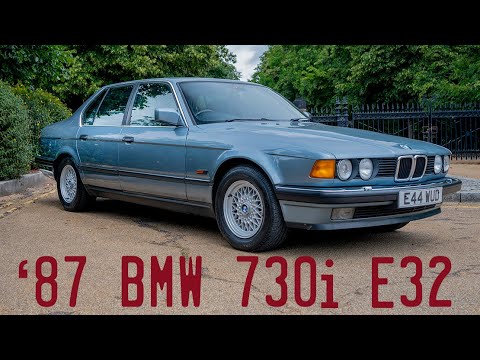 22:37
22:37BMW E32
 1:17:13
1937 Ford