0 views
Share this clip
Know someone who'd love this clip?
Share it with friends and fellow fans.
Share this clip
Know someone who'd love this clip?
Share it with friends and fellow fans.
Henry Farman's first aircraft had been bought from the Voisin brothers in 1907. Soon after his first flights Farman began to modify and improve the design of the aircraft, which was known as either the Farman I or Voisin-Farman I. During 1908 Farman re-covered the aircraft with 'Continental' rubberized fabric and added the side-curtains, and it was re-designated the Farman I-bis. Following the Wilbur Wright-piloted flying demonstrations at Le Mans in August 1908, Farman fitted ailerons to the aircraft. The Voisin brothers built another aircraft, to be called the Farman II, incorporating refinements of the design to Farman's specification. Voisin later sold this aircraft to J.T.C. Moore-Brabazon. Brabazon subsequently exported the aircraft to England, where it became known as the Bird of Passage. This episode angered Farman, and caused him to sever his association with Voisin in early 1909 and start aircraft construction for himself. The Farman III was, like the Voisin, an equal-span pusher biplane with a single forward elevator and biplane tail surfaces carried on booms. Farman's design eliminated the covered nacelle for the pilot which also carried the elevator in the Voisin: instead the elevator was mounted on two pairs of converging booms. Lateral control was effected by ailerons on both upper and lower wings. The undercarriage also differed considerably, replacing the pair of wheels with a pair of skids each carrying a pair of wheels sprung using bungee cord and restrained by radius rods. As first flown in April 1909 the aircraft had vertical fixed surfaces carrying twin rudders on their trailing edges and very broad-chord ailerons. The airframe was made of wood, mainly ash, with members joined using aluminium sockets. Wing and tail surfaces were covered with a single fabric surface, with the ribs and two spars enclosed in pockets. The fixed vertical surfaces had been removed and the ailerons replaced with smaller ones by the time the aircraft appeared at Reims in August. The original engine was a 50 hp (37 kW) 4-cylinder inline water-cooled Vivinus. Farman replaced the engine with the new and more reliable 50 hp (37 kW) Gnome Omega rotary engine while the aircraft was at the Grande Semaine d'Aviation at Reims, and the new engine's reliability contributed towards his success there. The aircraft had been entered with the Vivinus engine, and the last-minute engine replacement caused some of his competitors to try to get him disqualified. Production aircraft were fitted with a variety of engines, including the Gnome and the E.N.V. water-cooled V-8 engine. In 1910 the design was modified by adding an elevator to the upper tailplane surface. The Farman III had enormous influence on European aircraft design, especially in England. Drawings and details of the aircraft were published in England by Flight, and it was so widely imitated that its layout became referred to as the "Farman Type". Among these aircraft are the Bristol Boxkite, the Short S.27 and the Howard Wright 1910 Biplane. The Bristol aircraft was so similar to Farman's design that he considered legal action. Farman was rewarded by commercial success, and many examples of the type were sold. Farman III aircraft were also built in Germany by the Albatros Flugzeugwerke at Johannisthal as the Albatros F-2. Wikipedia
The Music of the Spheres World Tour is the eighth concert tour undertaken by British rock band Coldplay. It is being staged to promote their ninth and tenth studio albums, Music of the Spheres (2021) and Moon Music (2024), respectively. The tour began at San José's Estadio Nacional de Costa Rica on 18 March 2022, paused at London's Wembley Stadium on 12 September 2025 and the band expect to restart in 2027. It marked their return to live performances after the COVID-19 pandemic, spanning 225 dat...
More about passa→Added
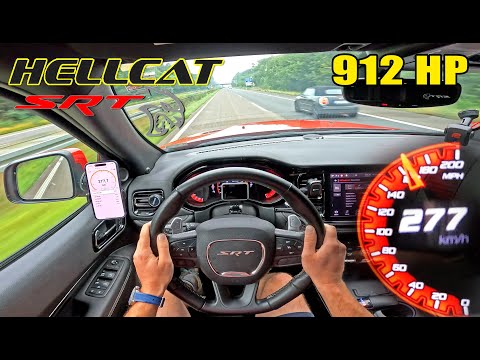 8:11
8:11Limousine, FIA, Performance car, passa, rall, Dodge, rally, Car, Vehicle, Sedans
 42:31
42:31passa, Car
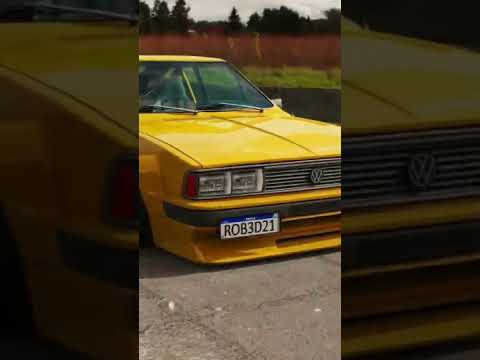 0:10
0:10passat, passa, Volkswagen, Car
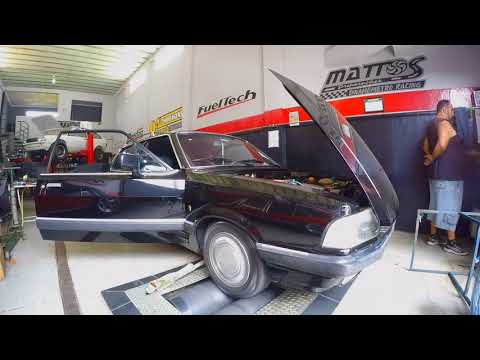 2:34
2:34passa, Car