0 views
Share this clip
Porsche Vision 357 | Design Inspired From Porsche 356 | 75 years of Porsche Sports Cars | MC
Know someone who'd love this clip?
Share it with friends and fellow fans.
Share this clip
Know someone who'd love this clip?
Share it with friends and fellow fans.
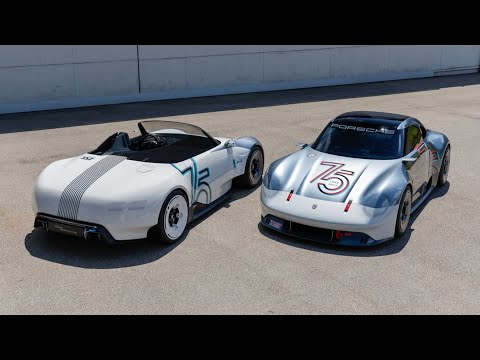
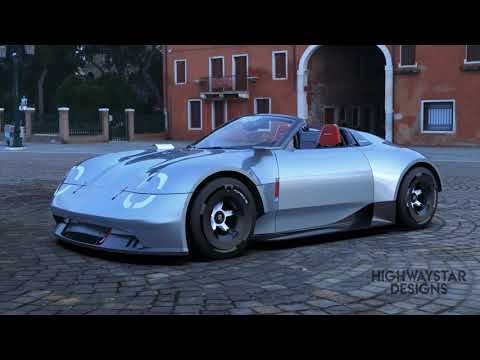
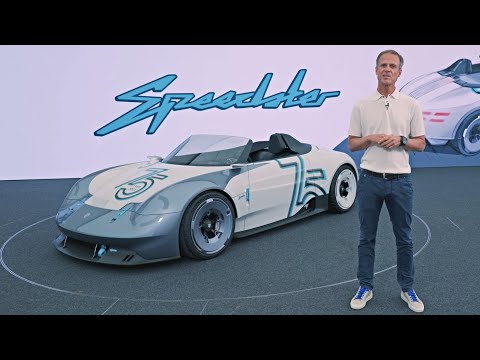
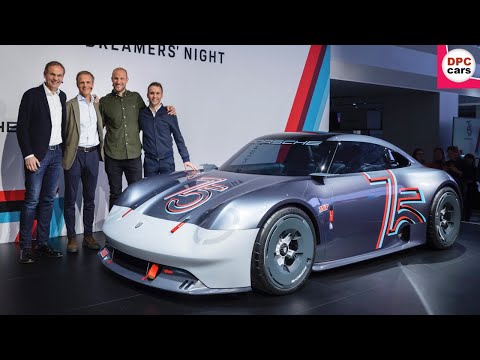
@motorcontinent #porsche #porschevision357 #vision357 #sportscars #supercars #racecars #porsche356 #auto #automotive #automobile #cars #specialedition #motor #motorcontinent #porschevision 75 years ago, on 8 June 1948, the 356 No. 1 Roadster became the first automobile bearing the name Porsche to receive its general operating permit – the birth of the sports car brand. With its monolithic form, the narrow passenger cell with an abruptly sloping flyline and broad shoulders, the proportions of the Porsche Vision 357 evoke the lines of the 356. The windscreen sharply wraps around the A-pillars. As in its historic forebear, Porsche is pushing the boundaries of glass production: early 356s had a split windscreen with a bar down the middle. The split design was replaced in model year 1952 by a one-piece windscreen with a bend down the centre. The A-pillars of the Porsche Vision 357 are black and visually unite the side window surfaces into a single unit. This DLO (daylight opening) graphic resembles the visor of a helmet. The functional details are integrated and underpin the sculptural character of the vehicle. This includes the concealed door openers by the side windows and the tail lights, which sit behind a patterned array of points in the body itself. Another nod to the original is the grille pattern in the rear, in which the third brake light is integrated. Like all current Porsche models, the Vision 357 features a four-point light signet in front. The round design of the headlights is also a throwback to the characteristic lights of the 356. There are also parallels in the paintwork: the two-tone concept with Ice Grey Metallic and Grivola Grey Metallic in the nether regions of the front end hearkens back to the grey tones that were already popular in the 1950s. The wide track makes a bullish impression and enhances driving stability. The 20-inch wheels are made of magnesium and are equipped with aerodynamically advantageous carbon fibre hubcaps and central locks. Visually, they also recall a legendary Porsche wheel: the 356 A and 356 B with drum brakes had rims with the notably large bolt circle of 205 millimetres. The “75” anniversary logo adorns the doors and the front of the design study like a start number. And that is far from the only detail from the world of racing: there’s nothing behind the lower area of the front wheels, which allows better ventilation of the wheel arches. The wrap-around, jointless front bonnet is fastened with quick-release mechanisms. Threaded rods stabilise the large front spoiler. On the side sills, the Porsche designers employed natural fibre-reinforced plastic (NFRP) – as in the Porsche Mission R, the concept study for an all-electric GT racing car presented in 2021. The basis for the sustainable materials is provided by flax fibres from agriculture. Instead of traditional exterior mirrors, the design study is equipped with cameras on the edge of the roof. The visible tailpipe trim in the rear is made of a blueish-looking titanium, while the inside of the tailpipe is made of ceramic. Like the 718 Cayman GT4 RS, the Porsche Vision 357 has process air intakes positioned high behind the driver- and passenger-side windows, which designers adorned with comic-style “Air” decals. Like the “eFuel” logo on the tank cap on the right wing, the decals are reminiscent of motorsport decals. The naturally aspirated six-cylinder boxer engine theoretically draws 368 kW (500 PS) from four litres of displacement. The high-speed mid-engine would be designed for operation with e-fuels. The 356 No. 1 Roadster was the very first car built by the Porsche brand. With the two-seater with a multi-tubular frame and mid-engine, Ferry Porsche and his team fulfilled his dream of building his own sports car. The Porsche 356 went into series production as a coupé with a different frame and a 40-PS rear engine instead of the original mid-engine concept. This type formed the foundation for the success of the Porsche brand. After the first largely manually built cars (coupé and convertible) 356/2 with an aluminium bodyshell, Porsche moved from Gmünd back to Stuttgart at the end of 1949. This is where series production of the Porsche 356 sports car began. The sheet-steel bodies were manufactured by Stuttgart-based Reutter bodyworks while engine production began in Zuffenhausen in space rented from Reutter as Porsche Werk 1 was still occupied by the Allies. Some 78,000 units of the Porsche 356 had been built by 1965. 356 (“pre-A”, 1948-1955), 356 A (1955-1959), 356 B (1959-1963) and 356 C (1963-1965) were available in a range of open- and closed-top body versions and various performance levels. Thanks for watching Subscribe, Comment, like, share Don't miss next videos, subscribe now Instagram : https://www.instagram.com/motorcontinent/ Facebook : https://www.facebook.com/MotorContinent Twitter : https://twitter.com/MotorContinent.
The Porsche Vision 357 is a coupe concept car produced by German automobile manufacturer Porsche, presented in January 2023 and intended to celebrate the 75th anniversary of the company.
More about Porsche Vision 357→Added
 2:06
2:06Porsche Vision 357
 1:01
1:01Porsche Vision 357
 2:53
2:53Porsche Vision 357
 2:51
2:51Porsche Vision 357