0 views
Share this clip
Know someone who'd love this clip?
Share it with friends and fellow fans.
Share this clip
Know someone who'd love this clip?
Share it with friends and fellow fans.
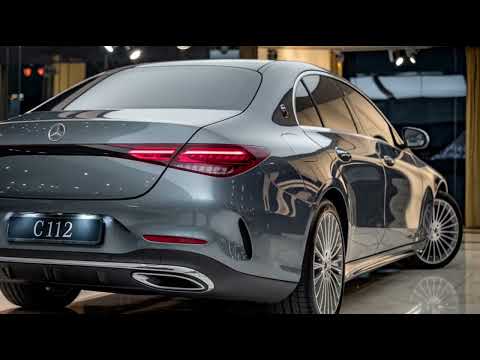
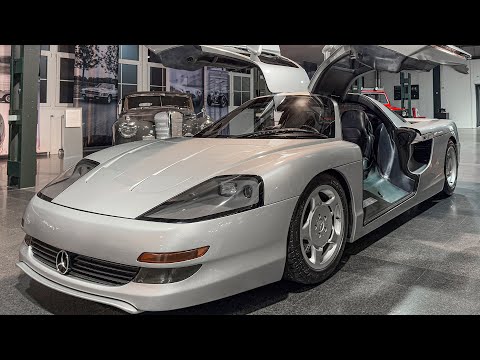
The Mercedes-Benz C112 was an experimental, mid-engine concept car developed by Mercedes-Benz in 1991. It was conceived as a testbed for advanced technologies and also intended to be a road-legal counterpart to the Sauber C11 Group C race car. Despite sharing a chassis code with older Mercedes models, it was a completely unrelated and forward-thinking vehicle. Here's a review of the Mercedes-Benz C112 based on its design, technology, and significance: Concept and Intent: The C112 was designed to showcase Mercedes-Benz's technological prowess and explore the possibilities of a high-performance, mid-engine supercar. It was a bold departure from the brand's traditional image at the time and aimed to test features that were considered cutting-edge for the era. Design: The C112 sported a sleek and futuristic design for its time, developed by the Mercedes-Benz Advanced Design team under Bruno Sacco. Key design elements included: * Mid-Engine Layout: This configuration prioritized weight distribution and handling. * Gullwing Doors: A nod to the iconic 300 SL, the servo-assisted gullwing doors added a dramatic flair. * Aerodynamic Body: The car featured a low drag coefficient (Cd of 0.30) and active aerodynamic elements, including an electronically controlled front spoiler and a rear wing that adjusted based on speed to optimize downforce and stability. * Distinctive Look: Its proportions and styling were unlike typical Mercedes-Benz models of the era, hinting at a potential entry into the supercar market. Technology: The C112 was a rolling showcase of advanced technology, much of which was ahead of its time: * Active Body Control (ABC): The C112 was the first car to feature this revolutionary active suspension system. Using hydraulic cylinders and sensors at each wheel, ABC could virtually eliminate body roll, pitch, and squat, providing exceptional handling and ride comfort. * Electronic Rear-Wheel Steering ("Cybernetic Steering"): This innovative system enhanced agility and stability, especially during high-speed cornering. * Advanced Braking and Traction Control: It featured the latest generation anti-lock braking system (ABS) and acceleration skid control (ASR). * Tire Pressure Monitoring System: A system that warned the driver of sudden pressure loss. * Distance Warning Radar: An early form of adaptive cruise control or collision warning. * Luxurious Interior: Despite its performance focus, the interior was well-appointed with leather from the S-Class, air conditioning, heated and adjustable seats, climate control, and a GPS navigation system. Performance: The C112 was powered by a newly developed 6.0-liter V12 engine (M120), producing: * Power: 408 hp (300 kW) at 5,200 rpm * Torque: 428 lb-ft (580 Nm) at 3,800 rpm This engine was paired with a 6-speed manual transmission driving the rear wheels. Mercedes-Benz estimated the performance figures to be: * 0-100 km/h (0-62 mph): around 4.9 seconds * Top Speed: approximately 310 km/h (193 mph) Significance and Demise: The C112 generated significant interest, with over 700 orders reportedly placed by potential customers. However, despite the enthusiasm and its technological marvel, Mercedes-Benz decided not to put the C112 into production. Several reasons are cited for this decision: * High Production Costs: The advanced technology and complex construction would have made it a very expensive vehicle to produce. * Market Strategy: Mercedes-Benz management reportedly felt that the company didn't need an image-building supercar at that time, especially with the success of their existing luxury car projects. * Environmental Concerns: Publicly, Mercedes-Benz suggested that the world didn't need another high-speed sports car, possibly influenced by the strong environmental movements in Germany at the time. Legacy: Despite never reaching production, the Mercedes-Benz C112 remains a significant concept car. It served as a crucial testbed for technologies like Active Body Control, which eventually found their way into Mercedes-Benz production vehicles. The C112 also demonstrated Mercedes-Benz's capability to design and engineer a world-class supercar, even if they ultimately chose not to pursue it at the time. It's remembered as a "technological miracle" and a "supercar that never happened," leaving enthusiasts to wonder what could have been. #mercedes c112#c112 specs#c112 performance
The Mercedes-Benz C112 was an experimental mid-engine concept car built in 1991 by German automobile manufacturer Mercedes-Benz as a test bed, similar to the later versions of the C111. Despite using the same chassis code, it was not related to the W112 series of limousines and coupes of the 1960s. The C112 was intended to be the road-legal counterpart of the Sauber-built C11 Group C prototype race car developed for the 1990 World Sports-Prototype Championship.
More about Mercedes-Benz C112→Added
 9:42
9:42Mercedes-Benz C112
 3:28
3:28Mercedes-Benz C112
 0:28
0:28Mercedes-Benz C112
 10:01
10:01Mercedes-Benz C112