History of BMW Motorcycles
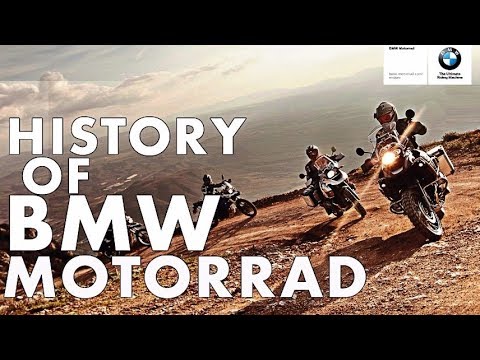
https://bikesaint.com/blogs/news/history-of-bmw-motorcycles The BMW brand has long been associated with quality and performance, and their motorcycles are no different. From the early days of the BMW R32 to the modern-day sport motorbikes, BMW has consistently produced some of the most reliable and powerful motorcycles in the world. In this video, we'll take a look at the history of BMW motorcycles and explore how this legendary brand has shaped the motorcycling industry. BMW's Motorrad brand was established in 1921 in Munich, Germany, when they began making engines for other companies. Their own motorcycle models—branded as BMW Motorrad—debuted in 1923 with the BMW R 32. This model was powered by a flat-twin engine, also recognized as a "boxer-twin" engine. In 1922, BMW and Bayerische Flugzeugwerke joined forces, with the BFw Helios and this merge became the foundation of the first BMW motorcycle. This motorcycle, the 1923 BMW R 32, was powered by a 486cc flat-twin engine, also known as a "boxer-twin" engine created by Max Friz (Fritz) BMWs core engineer. With a reliable engine and stylish design, the R 32 quickly gained popularity and established BMW as a top motorcycle manufacturer. This success was followed by several other models, including the R51/3, R50/2, and R75/5. These motorbikes solidified BMW's reputation for producing reliable, powerful, and stylish motorcycles. Throughout the 1930s, BMW Motorrad continued to develop and refine their engine designs, introducing several new models such as the R61, R71, and R12. These models featured improvements in engine efficiency and power output, as well as a higher level of comfort for the rider. BMW also incorporated new technologies such as a 4-speed transmission, plunger-type rear suspension, and electric lighting for night riding. All of these advancements made it easier for riders to enjoy their BMW motorcycles and explore new places. During World War II, the German military sought as many different types of vehicles as it could procure, and several German companies were asked to construct motorcycles. Particularly well-suited for the difficult conditions in North Africa, the BMW R 75 showed good performance due to the flat-twin engine having protruding cylinders, which provided more efficient cooling than other designs that overheated in the sun. Additionally, the shaft-drive of the R 75 was better able to resist damage from desert grit compared to the chain-drive. As a result, the R 75 went on to be a model that inspired similar designs from US companies, including the Indian 841 and Harley-Davidson XA. In the 1950s, BMW introduced their R 50 and R 60 models, which were powered by an air-cooled boxer-twin engine. This design allowed the engines to be more compact, and thus, resulted in more maneuverable motorcycles. The air-cooled engines also proved to be more reliable and easier to maintain. The R 50/2 and R60/2 were particularly successful and became the bestselling models of the 1950s. The success of the air-cooled boxer-twin engine led BMW to continue to refine and improve the design, introducing the R69S in 1961. This model featured a larger 600cc engine, improved brakes, and an updated suspension for a smoother ride. This iconic model was a favorite among police forces, as well as touring and recreational riders. The R69S was the first BMW motorcycle to be equipped with a speedometer and a tachometer. From here, BMW continued to introduce new models, improving on the boxer-twin engine design and creating iconic motorcycles such as the R90S, R100RS, and R1200C. In the 1980s, BMW introduced the K-Series of motorcycles, which utilized a single-cylinder, water-cooled engine mounted on a steel-tube frame. This design improved power delivery and fuel efficiency, while being more lightweight than the boxer-twin models. The K100 was introduced in 1983 and was powered by a 987cc engine. The K100RS was released in 1986 and featured a full fairing and a more powerful engine. This model was so successful that it was followed shortly by the K75 and K1100RS. BMW Motorcycles of the Modern Era In recent years, BMW has continued to refine their air-cooled boxer-twin engine while also introducing new models such as the F800R and F800GT. These models are powered by an 800cc parallel-twin engine and feature state-of-the-art technology such as ride-by-wire throttle, traction control, and anti-lock brakes. BMW has also introduced the S1000RR, a powerful 1000cc supersport motorbike with a top speed of 186 mph. BMW does not only have followers but there are critical voices from the motorcycle community as well. The most common points against the BMW motorcycles are that the engines lack character and that the modern motorcycles have too many electronic assistants that interfere with the pure original joy of riding a motorcycle.
Know someone who'd love this clip?
Share it with friends and fellow fans.